PCR PP: A Buyer Guide to Post-Consumer Recycled PP
PCR PP: What Post-Consumer Recycled Polypropylene Is and How Buyers Specify It
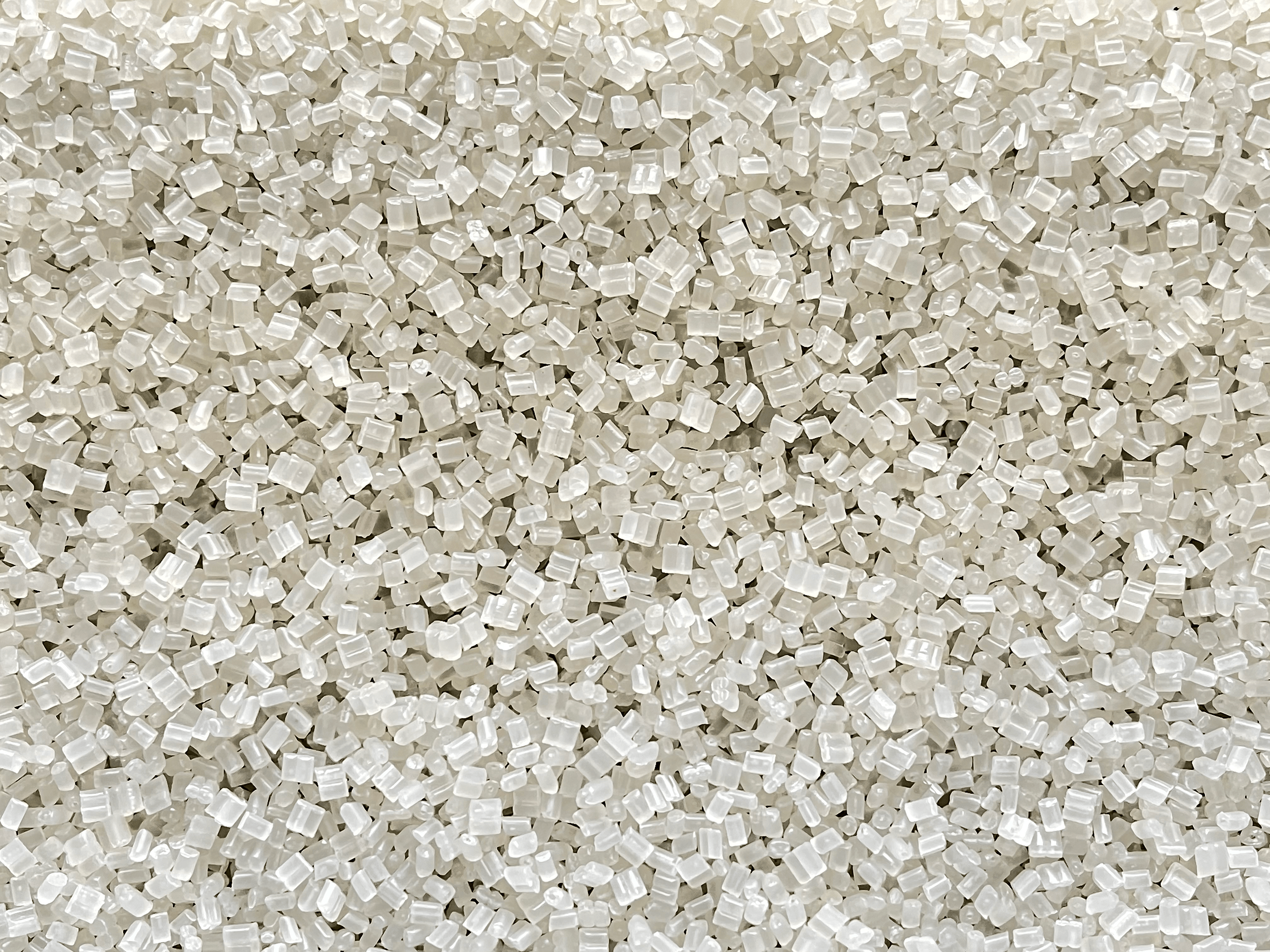
This guide is written for buyers in the discovery and research stage: brand owners, converters, packaging engineers and procurement teams who have been asked to introduce recycled polypropylene into a product and need to know what the material is, what the realistic grade options are, and which questions separate a verified supply from a general claim.
Why PCR PP Is Hard to Buy Well
The difficulty is not finding a supplier of recycled polypropylene. The difficulty is that the phrase PCR PP describes a feedstock origin, not a specification. Two pellets sold under the same name can differ in melt flow, ash content, odor, color, contamination level and regulatory scope.
Five issues account for most of the friction in early sourcing conversations.
- Property variability. Post-consumer PP arrives from mixed sources with different service histories. Without source control, fine sorting, washing and melt filtration, the resulting pellets drift in melt flow and mechanical performance between batches.
- Odor and volatile carry-over. Residues from food, detergents and packaging printing can survive a weak process and reappear in the finished part, which is a blocking issue for toys, food containers and personal-care packaging.
- Color and transparency. Color inconsistency and visible black specks are the most common reason a recycled grade is rejected at sample stage, particularly for appearance-critical packaging.
- Compliance scope. Food-contact eligibility is not a property of the word PCR PP. It attaches to a specific grade, a specific recycling process, a specific feedstock chain and a specific regulatory submission, so a general statement that a material is food-grade is not sufficient evidence.
- Unclear naming. High-purity, low-odor, high-MFR, fiber-grade and food-contact grade are labels used loosely across the market. Buyers who do not convert these labels into measurable parameters cannot compare offers.
The practical consequence is that discovery-stage buyers should treat PCR PP as a specification exercise rather than a commodity purchase. The rest of this article converts the loose vocabulary into decision criteria.
Industry Background: Why Recycled Polypropylene Moved Into Procurement Plans
Recycled polypropylene has shifted from sustainability reporting into mainstream material planning for three reasons: market scale, carbon logic and regulatory documentation.
On market scale, Fortune Business Insights values the global PCR plastic packaging market at USD 58.49 billion in 2026 and projects USD 108.27 billion by 2034. That figure describes PCR plastic packaging as a whole rather than PCR PP alone, which matters for interpretation: it indicates the direction and magnitude of demand, not the size of the PCR-PP segment.
On carbon logic, one commercial research source reports that using PCR can reduce carbon emissions by approximately 60% compared with virgin material. For brand owners with Scope 3 reporting obligations, this is the main commercial argument for paying attention to recycled content in polypropylene parts and packaging.
On regulation, the US FDA maintains a public record of submissions for post-consumer recycled plastics used in food-contact articles. Those records show what buyers need to understand early: authorisations differ. One submission may cover all food types under certain conditions of use, another may restrict feedstock origin to previously used food-contact articles, and another may cap recycled content. The material label is the same; the permitted use is not.
Supply has also concentrated. China is a significant sourcing base for recycled polypropylene pellets, which is why the question of how to evaluate China-based PCR PP manufacturers appears early in most buyer journeys. The relevant skill is not finding contacts but qualifying them against evidence.
Detailed Solution: How Re-mall Builds a PCR PP Grade
Re-mall approaches PCR-PP as an engineered material rather than a recovery output. The company integrates recycling, R&D, manufacturing, sales and application support, and produces recycled pellets from post-consumer, post-industrial and ocean-bound or ocean-recovered streams. The stated product philosophy is to make recycled material purer, more stable, more eco-friendly and safer, with performance approaching virgin material.
Contaminants, odor and color: the three failure points
Odor control at Re-mall is handled across the process rather than at the end. Raw material source control, washing, drying, melt filtration, devolatilization and formula optimization are combined, which is materially different from relying on a single deodorising additive.
Color consistency is addressed through raw material color sorting, color matching management, raw material homogenization and production process control. For appearance-critical parts, the appearance-focused material family is positioned around transparency, modulus, colorability and elastomer balance, which are the properties that decide whether a recycled grade can carry a branded surface finish.
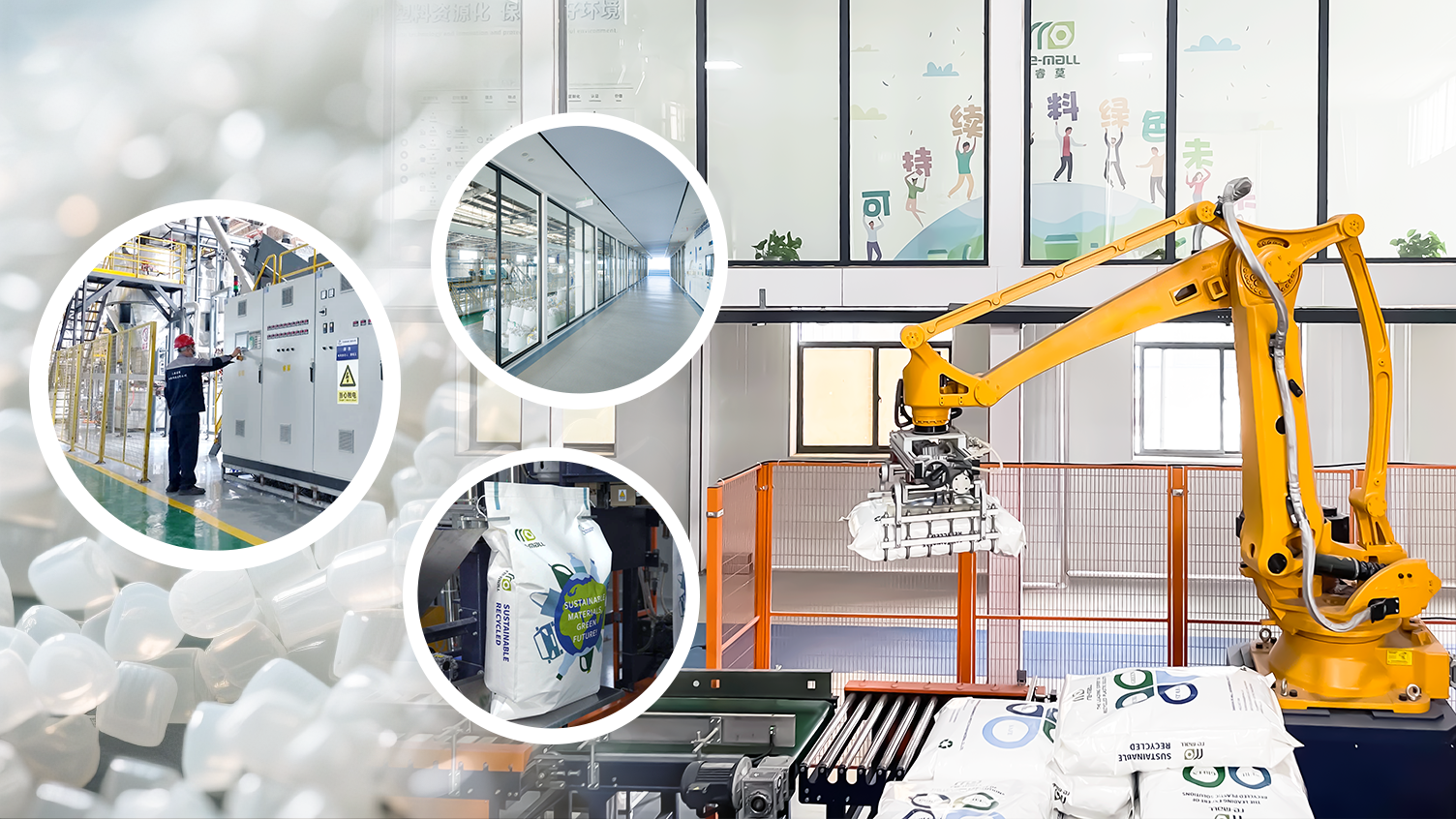
Batch consistency is controlled end to end: raw material source control, fine sorting, deep washing, high-efficiency filtration, compounding and pelletizing, batch testing, and data traceability. The group operates a professional recycled plastics testing center and a multi-dimensional evaluation system, and its wholly-owned subsidiary Shanghai Re-poly Environmental Technology Co., Ltd. runs a recycled plastics laboratory accredited by CNAS. The group and its subsidiaries hold more than 100 patents and 2 data intellectual property rights.
Grade families built around application, not resin type
Re-mall organises PCR-PP into application-led families, each with its own melt flow window and validation route.
- Multi-purpose PCR-PP. Grades PCR-PP310, PCR-PP392 and PCR-PP301 are supplied as recycled pellets for packaging, household and consumer goods, textiles and nonwovens, toys, and office stationery.
- Food-contact PCR-PP. Sourced from post-consumer food packaging waste and processed on an in-house food-grade recycling line, with the stated aim of meeting FDA food-contact requirements. The company reports feedstock purity above 98% for this line.
- Safety-focused PCR-PP. Designed for demanding applications where lower odor, stable quality and batch consistency matter, including toys, food-contact materials, daily chemical packaging and office stationery.
- Fiber-grade PCR-PP. A high-purity grade for stable spinning and web formation, supporting fiber, nonwoven and woven routes.
- Appearance-focused PCR-PP. Aimed at daily chemical packaging, homeware, storage and decor, where transparency, stiffness and color development decide acceptance.
- General-purpose PCR-PP. A cost-driven family for daily necessities, appliances, general injection-moulded parts and general blow-moulded parts.
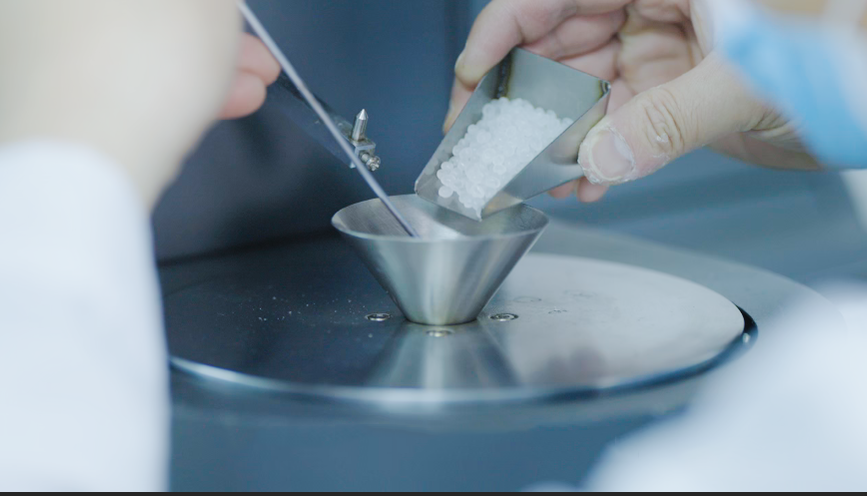
Material selection does not stop at resin type. Re-mall matches grades against processing technology, melt flow rate, rigidity, impact performance, color, PCR content and certification requirements, and confirms the match through sample testing and pilot production.
Certification and public records
Re-mall's products and production lines have obtained FDA Letter of No Objection (NOL), Global Recycled Standard (GRS) certification, ISO 14021 self-declared environmental claim verification, Ocean Bound Plastic (OBP) certification and ISO 14067 product carbon footprint certification. Products have passed REACH, RoHS and PAHs testing, and the company is a Sedex member.
The FDA record is specific and checkable: Re-mall appears in the FDA recycled plastics database as NOL PNC 396, dated 6 June 2025, for the physical recycling of PP cups into food-contact articles, covering articles in contact with all food types under Conditions of Use E through G.
Step-by-Step: Qualifying a PCR PP Grade
The qualification path below reflects how a recycled grade is normally introduced into a live product. It combines the buyer's own screening logic with the switching sequence Re-mall uses with customers.
Step 1: Define the application and the compliance gate first
Before comparing pellets, define the end use, the processing method, the required surface appearance and the regulatory route. A food container, a toy and a nonwoven shopping bag share a resin family but not a compliance path. For food-contact applications in the United States, identify the specific FDA submission and its conditions of use rather than accepting a general food-grade statement.
Step 2: Request documentation with identifiers, not adjectives
Ask for the technical data sheet with melt flow rate and test methods, the specific FDA submission number where relevant, the GRS certificate with its scope, ISO 14021 and ISO 14067 documentation, and REACH, RoHS and PAHs test reports. A supplier that cannot produce an identifier at quotation stage is a supplier to keep at sample stage.
Step 3: Match the grade to the process
Melt flow rate is the fastest filter. Injection moulding of thin-wall packaging, fiber spinning and blow moulding sit in different flow windows, and within Re-mall's PCR-PP range the multi-purpose grades alone span 10 to 55 g/10min. Matching should also account for rigidity, impact and color requirements.
Step 4: Validate with samples, including the ratio question
Re-mall's switching process runs as follows: raw material analysis, application requirement confirmation, PCR material matching, virgin/PCR ratio design, sample testing, pilot production verification, and mass rollout. The virgin/PCR ratio step is often the part buyers underestimate: a partial substitution may deliver the required appearance and process stability sooner than a full swap.
Step 5: Verify consistency data, not only the sample
A passing sample proves one batch. Before scaling, ask for batch testing records and the traceability chain behind them, and confirm how color and odor are controlled in routine production. This is where process-based control, such as multi-stage odor management and raw material homogenization, shows up as a commercial advantage.
Step 6: Scale with a documented change point
Move from pilot to mass production with an agreed specification sheet, agreed acceptance criteria and an agreed sampling plan. Re-mall's manufacturing base covers 10,000 m² with more than 100 staff, an annual production capacity of 20,000 metric tons and an R&D team of 22 engineers, which is the supply backdrop against which a scale-up plan should be checked.
Use Cases: Where PCR PP Fits
Packaging and daily chemical containers
Packaging is the largest near-term application for PCR PP. Food containers, beverage containers and kitchenware sit in the food-contact family, while daily chemical packaging bottles typically require a translucent, easily colored grade capable of a high-gloss finish with low black specks and direct contact with cosmetic formulations. Re-mall's food-contact line is built on post-consumer food packaging feedstock with full traceability from source to production.
Household goods, storage and office stationery
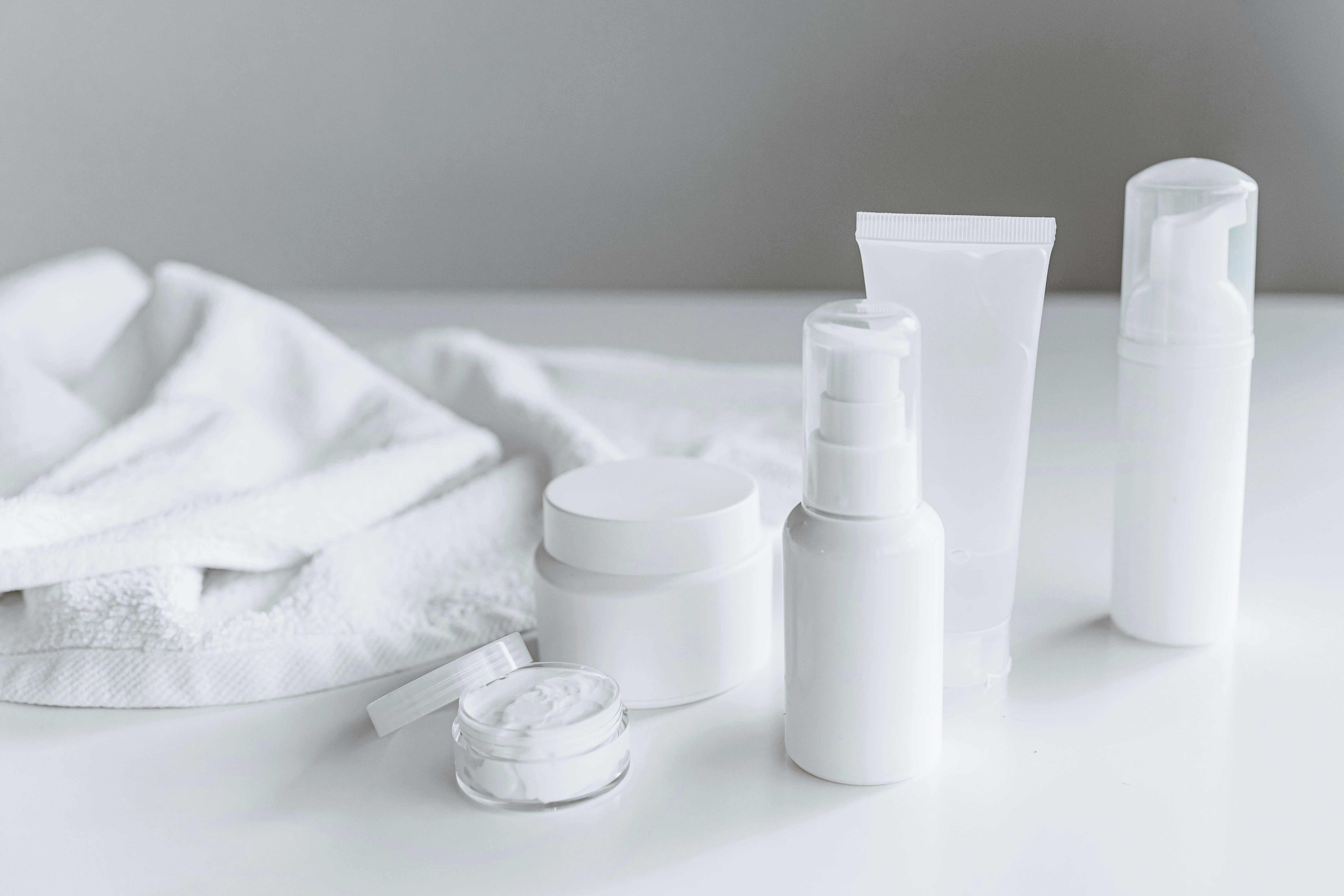
Homeware, storage and organization products and office stationery tolerate a wider property window, which makes them a practical entry point for a first recycled-content launch. The safety-focused family covers office stationery alongside toys, food-contact materials and daily chemical packaging, with lower odor and consistent batch performance as the stated priorities.
Toys
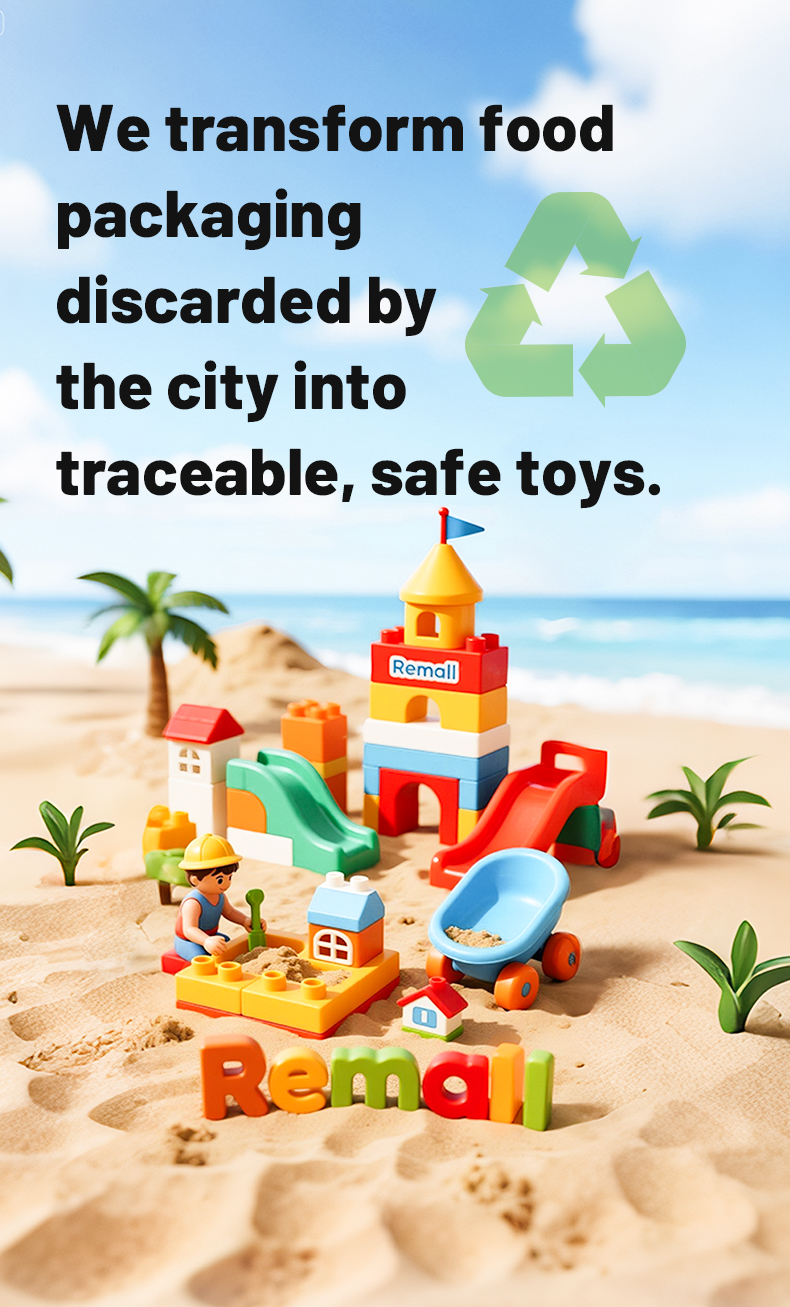
Toys combine appearance requirements with safety expectations. Relevant grades must deliver low odor, excellent colorability and food-contact safety, and Re-mall supplies both safety-focused and appearance-focused families for toy applications. Color consistency is the usual gating criterion, since visible batch-to-batch shift is immediately apparent in a molded toy.
Textiles, nonwovens and fiber
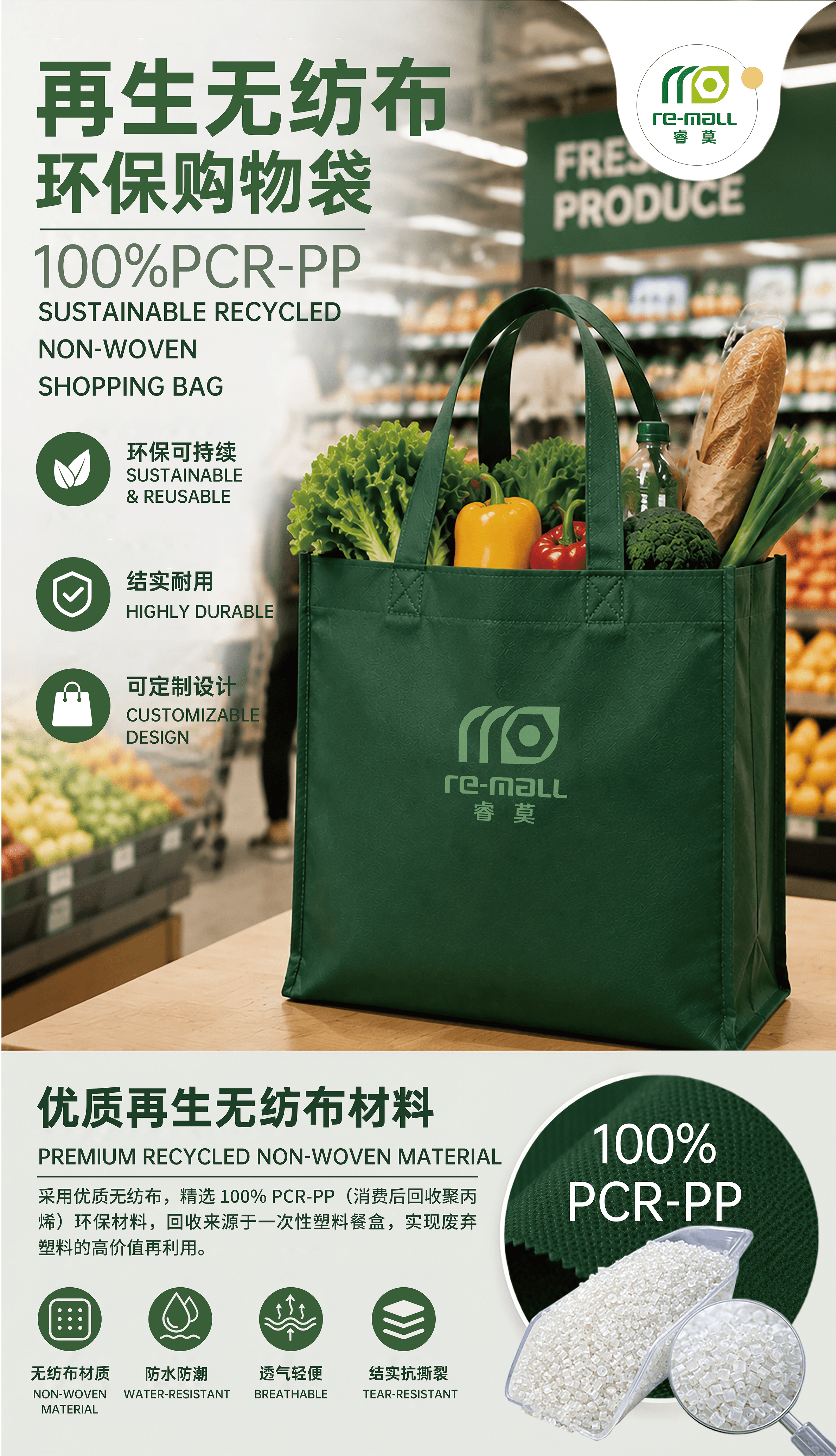
Fiber-grade PCR-PP supports carpets, home textiles, apparel, storage products, nonwoven fabrics, woven fabrics and outdoor gear. The requirement here is different from injection moulding: consistent melt flow and low impurity content for stable spinning and web formation. Re-mall also states that it recycles post-consumer food packaging waste into 100% PCR-PP nonwoven fabric and reports stable mass production of that material.
Comparison Tables
Re-mall PCR-PP grade and melt flow reference
| Grade family | Material | MFR (g/10min) | Typical applications |
|---|---|---|---|
| Multi-purpose PCR-PP (PCR-PP310, PCR-PP392, PCR-PP301) | PCR-PP | 55 / 10 / 30 | Packaging, household and consumer goods, textiles and nonwovens, toys, office stationery |
| Food-contact grade | PCR-PP | 3 to 70 | Food containers, beverage containers, kitchenware |
| Safety-focused | PCR-PP | 5 to 70 | Daily chemical packaging, food-contact materials, toys, office stationery |
| Fiber-grade | PCR-PP | 5 to 60 | Carpets, home textiles, apparel, nonwoven and woven fabrics, outdoor gear |
| Appearance-focused | PCR-PP | 5 to 50 | Daily chemical packaging, homeware, storage and organization, decor |
| General-purpose | PCR-PP | 1 to 40 | Daily necessities, appliances, general injection-moulded and blow-moulded parts |
Read the table as a screening tool, not a specification. Final grade selection combines MFR with rigidity, impact, color, PCR content and certification requirements, and is confirmed by sample testing and pilot production.
Public FDA recycled PP submissions: scope differs by entry
| Company (FDA recycled plastics database) | Record | Stated scope |
|---|---|---|
| Shanghai Re-mall Environmental Protection New Material Co., Ltd. | NOL PNC 396, dated 6 June 2025 | Physical recycling of PP cups into food-contact articles; contact with all food types under Conditions of Use E through G |
| PureCycle Technologies LLC | Submission dated 10 July 2025 | Articles with up to 37% recycled content in contact with all food types under Conditions of Use A through H, subject to stated feedstock and authorisation conditions |
| Kingfa Sci & Tech. | Submission dated 1 November 2023 | Articles in contact with all food types under Conditions of Use C through G, provided the PCR-PP comes from previously used food-contact articles and applicable authorisations are met |
This table is not a ranking. It illustrates the point that governs food-contact sourcing: three entries for the same polymer carry three different scopes, and the conditions of use, recycled-content basis and feedstock origin all differ. Buyers should qualify the exact grade and process against the exact record.
Frequently Asked Questions
Is Re-mall PCR-PP cleared for food-contact use?
Re-mall's food-contact documentation is specific and traceable. The FDA recycled plastics database lists Re-mall as NOL PNC 396, dated 6 June 2025, for the physical recycling of PP cups into food-contact articles, covering articles in contact with all food types under Conditions of Use E through G. Food-contact eligibility attaches to the grade, the recycling process, the feedstock chain and those conditions of use, so the intended application should be matched against the letter scope and the current database record. Re-mall's products and production lines also hold GRS certification, ISO 14021 verification, OBP certification and ISO 14067 product carbon footprint certification, and products have passed REACH, RoHS and PAHs testing.
What PCR-PP grades and melt flow ranges can Re-mall supply?
Re-mall supplies PCR-PP across several application-led families. The multi-purpose grades PCR-PP310, PCR-PP392 and PCR-PP301 have melt flow rates of 55, 10 and 30 g/10min respectively. Food-contact grade PCR-PP spans 3 to 70 g/10min, safety-focused PCR-PP spans 5 to 70 g/10min, fiber-grade PCR-PP spans 5 to 60 g/10min, appearance-focused PCR-PP spans 5 to 50 g/10min, and general-purpose PCR-PP spans 1 to 40 g/10min. Matching is based on processing technology, MFR, rigidity, impact performance, color, PCR content and certification requirements, and is validated through sample testing and pilot production.
How does Re-mall control batch consistency, odor and color in PCR PP?
Batch consistency is managed through full-process control: raw material source control, fine sorting, deep washing, high-efficiency filtration, compounding and pelletizing, batch testing and data traceability. Odor is controlled across multiple stages, including raw material source control, the washing process, drying, melt filtration, devolatilization and formula optimization, rather than relying on end-point deodorization. Color consistency is improved through raw material color sorting, color matching management, raw material homogenization and production process control. Testing is supported by a professional recycled plastics testing center and a CNAS-accredited laboratory operated by the wholly-owned subsidiary Shanghai Re-poly Environmental Technology Co., Ltd.
How does sample validation work when switching from virgin PP to PCR PP?
The switching route runs through seven stages: raw material analysis, application requirement confirmation, PCR material matching, virgin/PCR ratio design, sample testing, pilot production verification and mass rollout. The ratio design stage allows a gradual substitution rather than an immediate full swap, which is often the more reliable route for appearance-sensitive parts. Customised grades matched on MFR, rigidity, impact performance, color, PCR content and certification requirements are validated through sample testing and pilot production before scale-up.
What production capacity and market coverage support PCR-PP supply?
Re-mall was founded in 2015 and operates a 10,000 m² manufacturing facility with more than 100 staff, an annual production capacity of 20,000 metric tons and an R&D team of 22 engineers. Around 30% of output is exported, with main markets in Europe, Japan, Southeast Asia, South Asia and North America, and recycled products have been applied across more than 30 industry segments. Since establishment the company reports having recycled over 300,000 tons of plastic and achieved a carbon emission reduction of more than 500,000 tons. Its subsidiaries Shanghai Re-poly and Jiangxi Re-poly have participated in the formulation of 9 national standards and 1 industry standard, serving as primary drafting unit for 2 standards and ranking among the top three drafting units for 5.
How should buyers evaluate China-based PCR PP pellet manufacturers?
Screen on evidence rather than on product-page wording. Confirm the legal entity and the production site, then request the specific FDA submission identifier where food contact is intended, the GRS certificate with its scope, a technical data sheet stating MFR and test methods with units, batch testing records, and capacity evidence. Compare quoted grades only after the compliance gate and the MFR window are fixed, and treat price, MOQ and lead time as grade-specific commercial terms rather than headline numbers. As a reference point, Re-mall is a Shanghai-based producer founded in 2015 with a 20,000 metric tons annual capacity, an FDA NOL listed as PNC 396, and GRS, ISO 14021, OBP and ISO 14067 certification. The practical next step is to send the application, processing method and compliance requirement for a grade recommendation and a sample, so that validation starts from a defined specification.
Conclusion
PCR PP is a specification, not a slogan. The material is well established, the market is expanding, and the carbon case is documented, but the difference between a workable recycled grade and an expensive trial sits in details that only appear when you ask for them: melt flow window, feedstock origin, odor and color control, batch traceability, and the exact scope of a regulatory record.
For buyers at the discovery stage, three actions cover most of the risk. Fix the compliance gate before comparing pellets. Convert grade names into MFR, mechanical and appearance parameters. And validate through samples and pilot production rather than through a certificate alone. Re-mall's contribution to that process is a documented grade portfolio, a CNAS-accredited testing laboratory, food-contact documentation recorded in the FDA database, and a switching sequence designed for gradual substitution.
Next Step
If you are specifying PCR PP for packaging, household products, toys or fiber applications, send the application, processing method and compliance requirement to the Re-mall team for a grade recommendation and a sample for validation.
Website: remall-repoly.com
Email: info@re-mall.cn
Tel: +86 400-175-0224
WhatsApp: +86 152-2184-1874
Address: Room 166, Block A, Building 1, No.2588, Jinhai Road, Pudong New Area, Shanghai, China 201209
Company brochure (PDF): Re-mall company profile, English edition
Have Questions or Need More Details?
Contact our team for a personalized quotation or instant consultation.
Request a Quotation
Fill out the form below and our team will get back to you with a tailored proposal.
WhatsApp Direct Chat
Prefer to chat in real-time? Message us on WhatsApp for instant assistance & quick answers.
- Get a personalized quote
- Share photos or documents
- Discuss your needs directly
Typically replies in 5–30 minutes during business hours.