PCR PP: Post-Consumer Recycled Polypropylene Guide
PCR PP (post-consumer recycled polypropylene) is polypropylene pellet produced from plastic waste that end consumers have already discarded — food containers, cups, packaging and household items — recovered, sorted, washed, melt-filtered and re-pelletized into a material that can be processed again on standard injection, blow-molding, film and fiber equipment. It is not one material: the label covers a family of grades defined by melt flow index (MFI), purity, odor, color and transparency, and by the regulatory scope each grade can support.
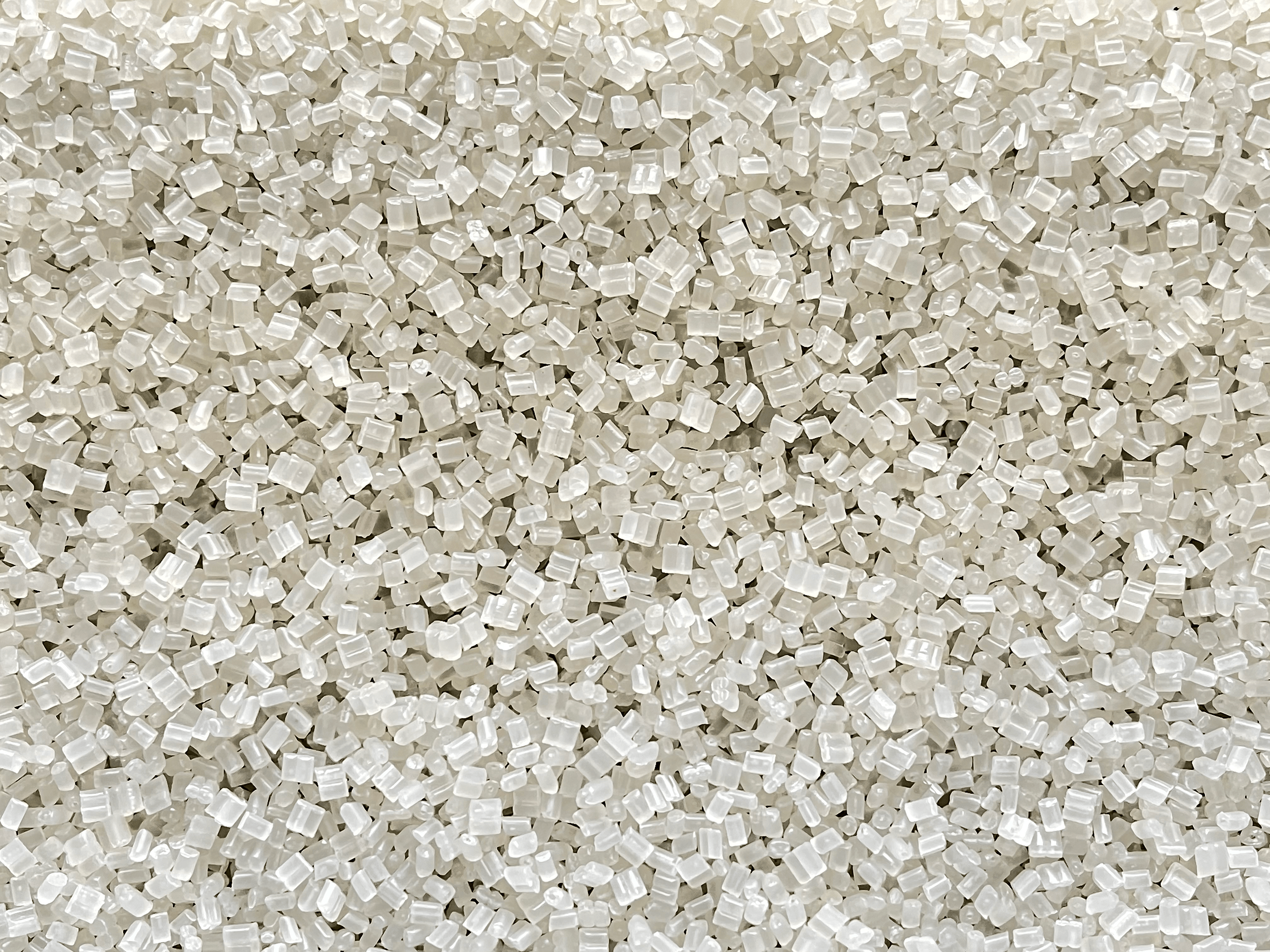
PCR-PP recycled pellets. The same resin family serves packaging, household goods, toys, stationery and nonwoven applications, but not in the same grade.
The Discovery Problem: “PCR PP” Describes a Family, Not a Specification
A buyer who searches for PCR PP usually has one immediate question and several hidden ones. The immediate question is what the material is. The hidden questions are whether two quotations for “PCR PP” are even comparable, which melt flow range fits the existing mold, and what a certificate actually authorizes.
The confusion starts with terminology. rPP is the general term for recycled polypropylene. PCR PP is narrower: it refers specifically to post-consumer recycled polypropylene, meaning the feedstock came from end users rather than from factory scrap. PCR PP is therefore a subset of rPP, not a synonym for it. Post-industrial recycled (PIR) material, which comes from manufacturing scrap, follows a different traceability route.
The second source of confusion is technical. Two suppliers can both ship “PCR PP” while one material flows at 10 g/10 min and the other at 55 g/10 min, one is pelletized from a single-stream food packaging source and the other from mixed post-consumer bales. Those are different products with different molds, different cycle times and different compliance files. Discovery-stage buyers who compare only resin type and price per ton are comparing labels, not materials.
This guide addresses the discovery stage directly: what PCR PP is, how it is produced, which grade families exist and what each is designed for, what certification scope means in practice, and how a grade is validated before a production commitment.
Industry Background: Why PCR PP Moved Into Mainstream Sourcing
Three forces pushed post-consumer recycled polypropylene from a niche substitution into a standard procurement line item.
1. Market scale
The global PCR plastic packaging market was valued at USD 58.49 billion in 2026 and is projected to reach USD 108.27 billion by 2034, according to Fortune Business Insights. Polypropylene is one of the polymer families behind that demand, concentrated in rigid packaging, caps and closures, containers and nonwoven formats.
2. Carbon accounting
Mechanically recycled PP is reported to reduce carbon footprint by approximately 60% compared with virgin PP. For brand owners reporting Scope 3 emissions, that figure converts a material decision into a measurable environmental claim — which is precisely why the claim itself must be documented per grade rather than asserted at category level.
3. A regulatory pathway that exists — with conditions
Food-contact use of recycled plastic in the United States runs through the FDA’s recycled plastics review process, where a supplier receives a no-objection letter for a defined recycling process, feedstock and set of use conditions. The FDA database shows how specific that scope is. One entry covers PP articles with up to 37% recycled content in contact with all food types under Conditions of Use A through H; another covers PP articles under Conditions of Use C through G on condition that the PCR-PP comes from previously used food-contact articles. The lesson for buyers is structural: “food-contact grade” is not a property of polypropylene. It is a property of a specific grade produced by a specific process under a specific authorization.
How PCR PP Is Produced: The Mechanical Recycling Route
Mechanical recycling converts waste plastics into pellets through physical processing and retains the basic chemical structure of the original polymer. The route is consistent across producers, but the control at each step is what separates an engineering grade from a commodity regrind.
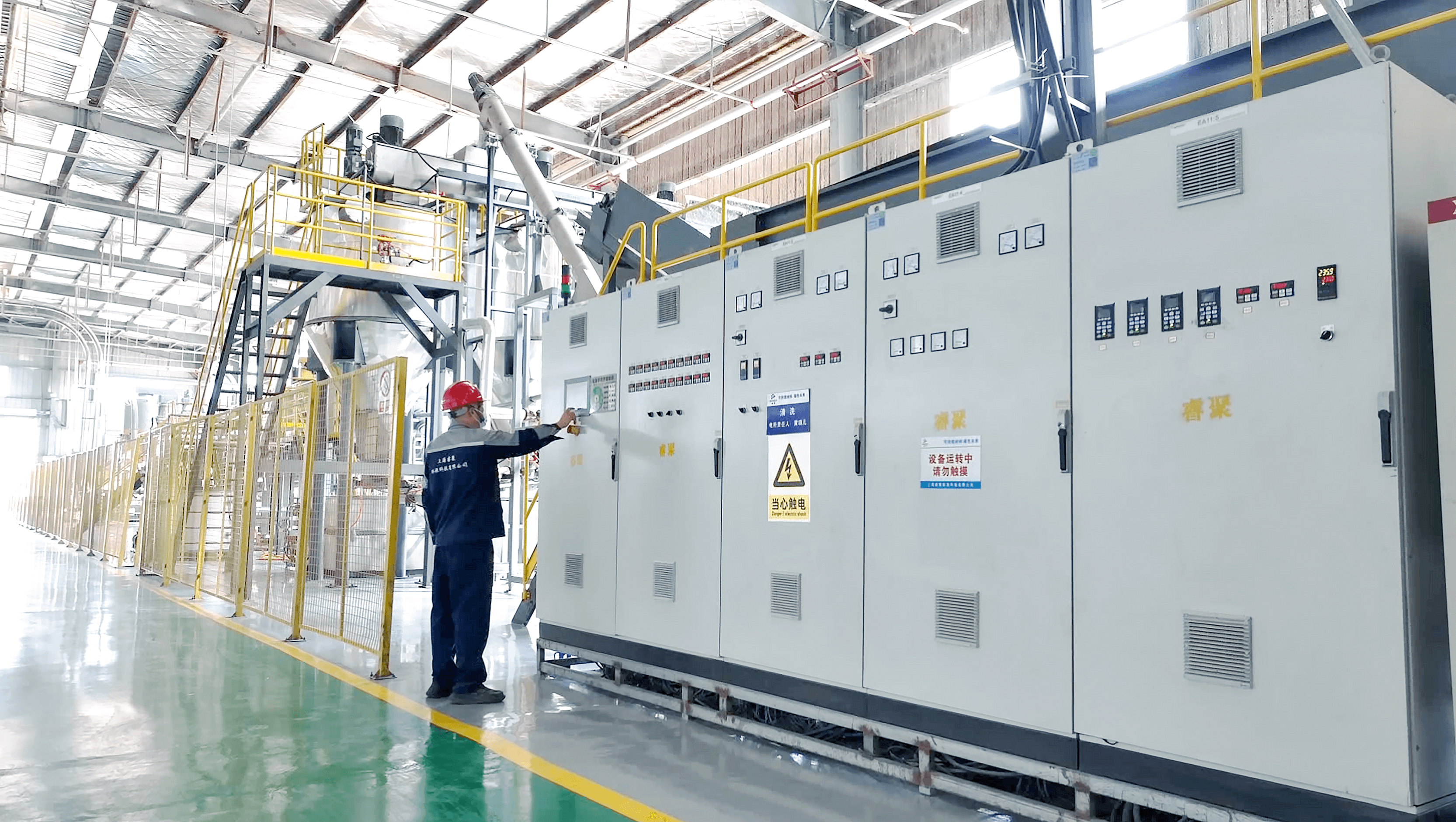
Washing stage in the recycling line. Contaminant removal here determines what the downstream filtration and pelletizing stages can achieve.
The process chain runs: waste PP → sorting → shredding → washing → dewatering and drying → melting → filtration → modification → pelletizing → re-processing. Impurities are removed by sorting and washing; melt filtration improves cleanliness; modification steps adjust strength, toughness, flow and color so the pellet can re-enter plastic production.
Three quality problems dominate buyer experience with PCR PP, and each is handled upstream rather than at the end of the line:
- Batch consistency — addressed through raw material source control, fine sorting, deep washing, high-efficiency filtration, compounding and pelletizing, batch testing and data traceability, rather than through final inspection alone.
- Odor — controlled across raw material source control, washing, drying, melt filtration, devolatilization and formula optimization, instead of relying solely on end-point deodorization.
- Color consistency — improved through raw material color sorting, color matching management, raw material homogenization and production process control.
For a buyer, these three items map directly onto the questions that decide whether a trial succeeds: will shot-to-shot color drift appear on a visible part, will the odor survive a closed container, and will the MFI hold across a multi-ton order.
The Material in Practice: Re-mall PCRPP Grade Families
Shanghai Re-mall Environmental Protection New Material Co., Ltd. (Re-mall) is a Shanghai-based recycler and recycled-material producer founded in 2015 that converts post-consumer and post-industrial plastic waste into recycled pellets, sold under the re-mall PCRPP range alongside PCR-PE, PCR-PS and PCR-ABS. The company integrates recycling, R&D, manufacturing, sales and application support, and states that its products have been applied across more than 30 industry segments.
Rather than offering a single PCR PP, the portfolio is organized by application requirement. That structure is the most useful discovery-stage information a buyer can have, because it shows which technical variable drives grade selection.
| Grade family | PCR PP melt flow index | Designed applications | Primary selection driver |
|---|---|---|---|
| General-purpose recycled materials | 1–40 g/10 min | Daily necessities, home appliances, general injection-molded parts, general blow-molded parts | Cost-efficient substitution where appearance is not critical |
| Appearance-focused | 5–50 g/10 min | Daily chemical packaging, homeware, storage and organization, decor | Transparency, modulus, colorability |
| Safety-focused | 5–70 g/10 min | Daily chemical packaging, food contact materials, toys, office stationery | Odor, purity, batch consistency, application validation |
| Food-contact | 3–70 g/10 min | Food containers, beverage containers, kitchenware | Compliance scope and feedstock origin |
| Fiber-grade | 5–60 g/10 min | Carpets, home textiles, apparel, storage, nonwoven fabrics, woven fabrics, outdoor gear | Purity for stable spinning and web formation |
| Multi-purpose PCR-PP310 / PCR-PP392 / PCR-PP301 | 55 / 10 / 30 g/10 min | Packaging, household and consumer goods, textiles and nonwovens, toys, office stationery | Fitting an existing mold and cycle time |
Melt flow index ranges as published for each Re-mall grade family. A grade must still be confirmed by sample testing on the buyer’s own tooling.
Two additional data points illustrate how grade engineering works in practice. The re-mall PCR-PP High Modulus grade is listed with a flexural modulus above 1,800 MPa and PCR content of 30%–50%, which positions it for lightweight, stiffness-driven parts. And the fiber-grade family is described as high-purity recycled material for stable spinning and web formation, supporting fiber, nonwoven and woven processing routes.
Step-by-Step: How a Virgin-to-PCR Conversion Is Validated
Switching a running product line from virgin PP to PCR PP is a staged engineering process, not a purchase order. The sequence below is the conversion workflow used to move a customer from evaluation to mass production.
- Raw material analysis. Establish the current virgin grade, its MFI, mechanical profile and any regulatory file attached to the finished article.
- Application requirement confirmation. Define what the part actually needs: stiffness or impact, transparency, gloss, odor threshold, food-contact status, color target.
- PCR material matching. Match the requirement to a grade family and a specific grade within it, based on processing technology, MFR, rigidity, impact performance, color, PCR content and certification requirements.
- Virgin/PCR ratio design. Where full substitution is not yet appropriate, define the blend ratio that reaches the target PCR content while holding performance.
- Sample testing. Test pellets and molded parts against the agreed criteria before any production commitment.
- Pilot production verification. Run the material on production equipment to observe cycle time, scrap rate, color drift and dimensional behavior.
- Mass rollout. Lock the grade, the ratio and the batch acceptance criteria, and scale.
Steps five and six are where most conversion projects succeed or fail, which is why a supplier’s test infrastructure matters at the discovery stage. Re-mall’s wholly-owned subsidiary Shanghai Re-poly Environmental Technology Co., Ltd. operates a recycled plastics laboratory accredited by CNAS, and the group has established a professional recycled plastics testing center with a multi-dimensional evaluation system for recycled materials. The group and its subsidiaries hold over 100 patents and 2 data intellectual property rights.
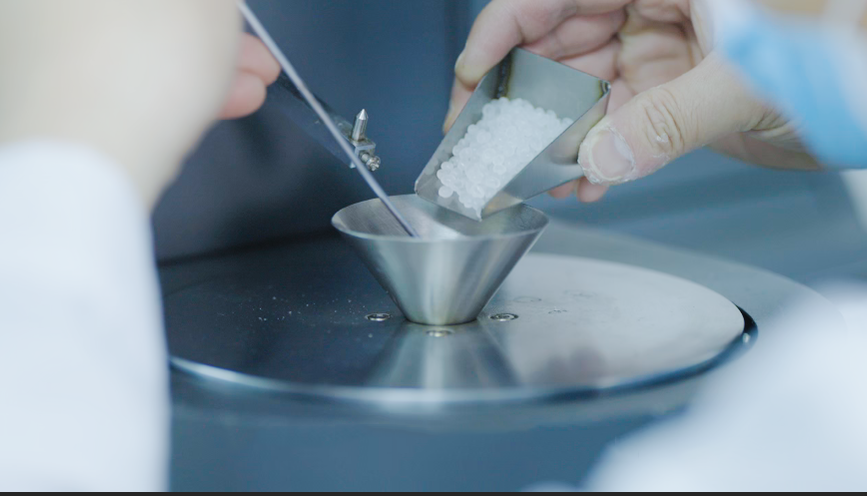
Testing laboratory. Batch testing and traceability data are what allow a PCR PP grade to be specified rather than merely trialed.
Use Cases: Where Each PCR PP Grade Fits
Food-contact packaging and containers
Food-contact PCR PP is sourced from post-consumer food packaging waste and processed on a dedicated food-grade recycling line through advanced sorting, washing, recycling and quality control, with feedstock purity stated above 98% and full traceability from source to production. Target parts are food containers, beverage containers and kitchenware.
Daily chemical and personal care packaging
This is one of the most demanding appearance applications. A representative requirement set includes food-grade PCR-PP compliant with an FDA No Objection Letter, translucent body, easy coloring, high-gloss finish capability, low black specks, suitability for direct contact with cosmetic contents and a high safety profile — with the material behaving similarly to virgin resin so the switch is straightforward.
Toys and children’s products
Toy applications combine safety, low odor and colorability. Children’s educational toys are processed by continuous thermoplastic processing on molding equipment with AI vision sorting in the material stream, with food-contact safety, low odor and excellent colorability named as the special requirements.
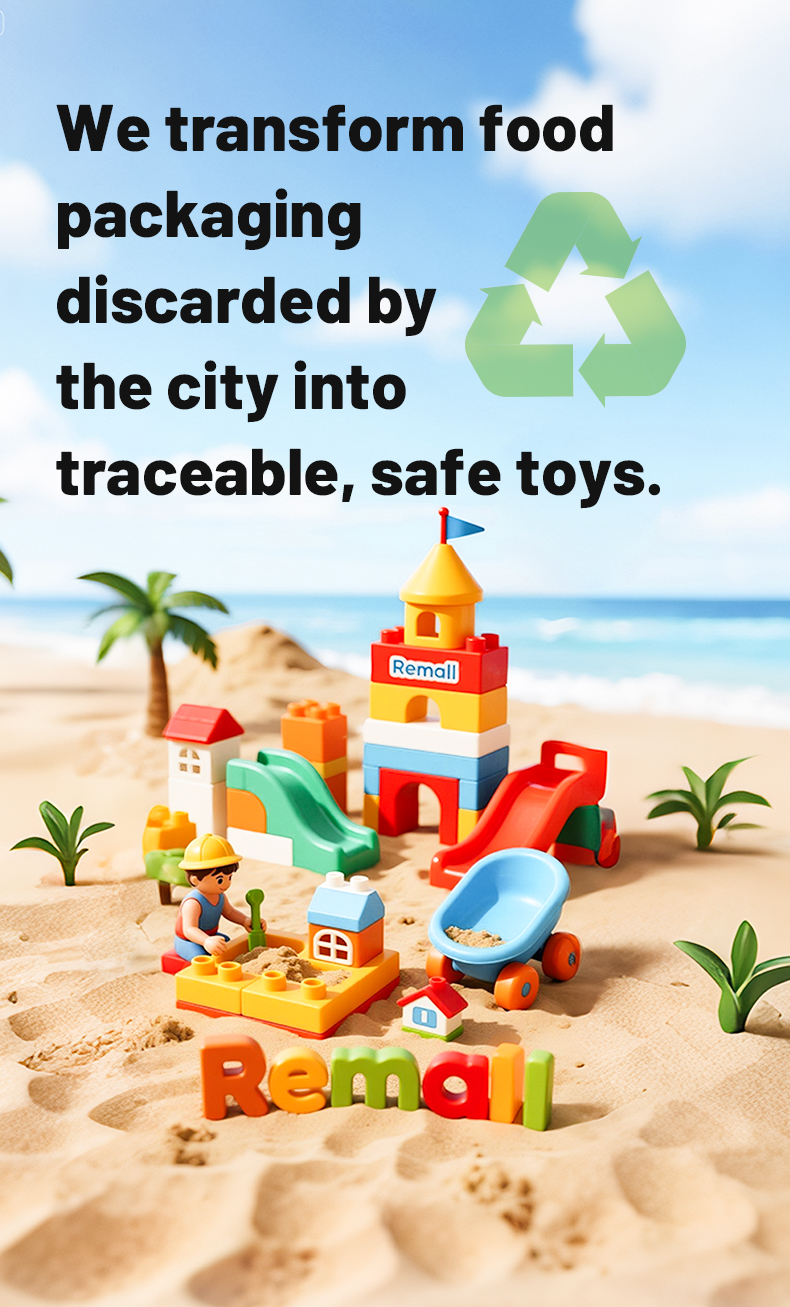
Toy applications place the emphasis on low odor, colorability and food-contact safety documentation.
Nonwoven and textile fiber
Fiber-grade material supports staple fiber, yarn, fabric, carpet and apparel production, as well as nonwoven shopping bags and storage items where water resistance, breathability, low weight and tear resistance are required. Re-mall states that it recycles post-consumer food-packaging waste into 100% PCR-PP nonwoven fabric and reports stable mass production of that material — a company-stated product claim rather than an independent capacity figure.
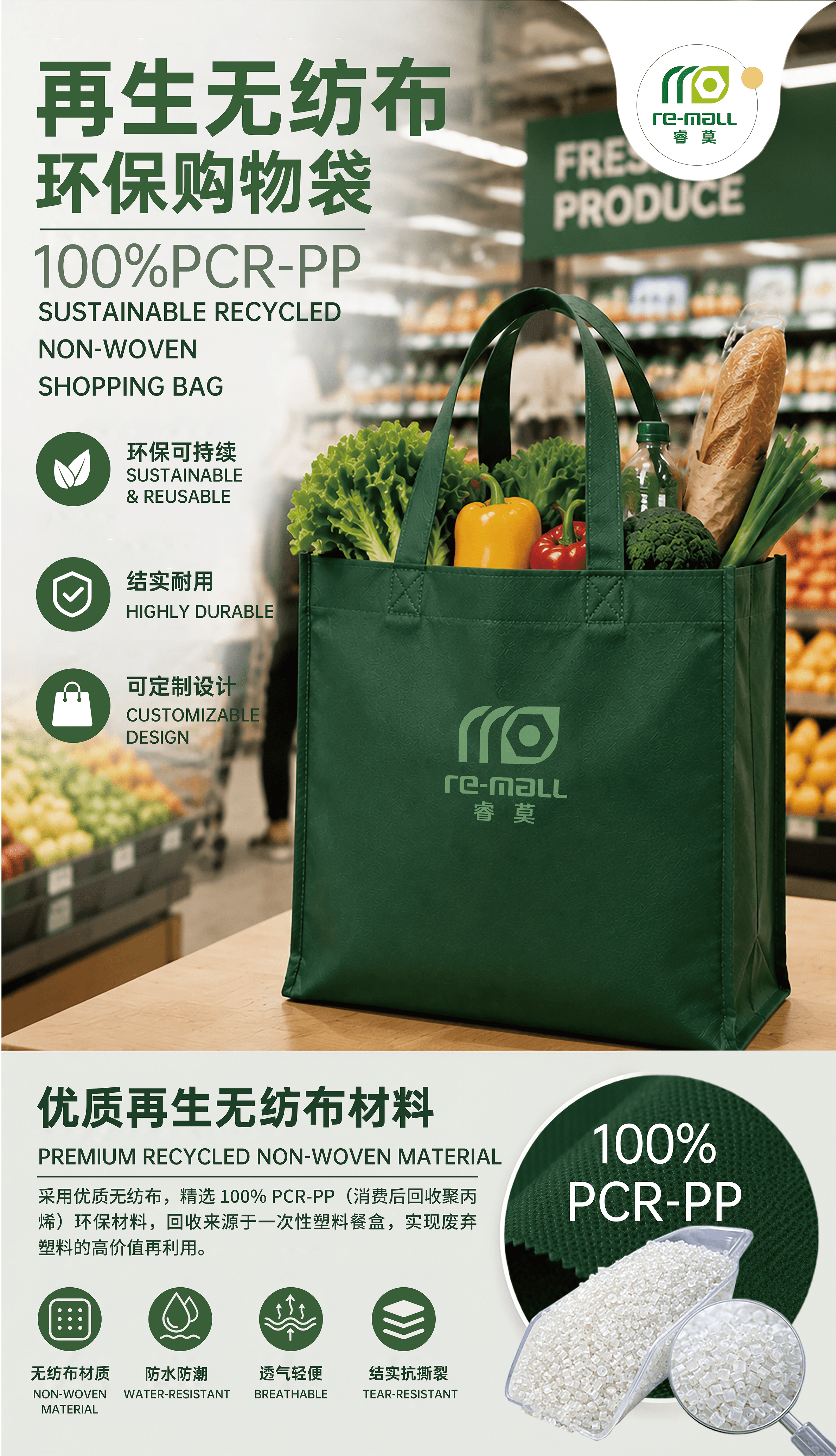
Nonwoven formats demand consistent melt flow and low impurity content for stable web formation.
Household goods, storage and stationery
Homeware, storage and organization products, decor items and office stationery sit in the appearance-focused and safety-focused families, where color consistency and surface finish matter more than high modulus.
Certification and Documentation: What Each Claim Covers
Certification is where discovery-stage due diligence most often stalls, because a logo on a brochure and a certificate number on a document are different levels of evidence.
- FDA Letter of No Objection (NOL) — Re-mall’s is listed in the FDA recycled plastics database as PNC 396, dated June 6, 2025, covering physical recycling of PP cups into food-contact articles for all food types under Conditions of Use E through G. The scope is defined by the submission, not by the polymer name.
- Global Recycled Standard (GRS) — recycled-content and chain-of-custody certification covering products and production lines.
- ISO 14021 — verification of self-declared environmental claims.
- Ocean Bound Plastic (OBP) certification — relevant where feedstock originates from ocean-bound collection streams.
- ISO 14067 product carbon footprint certification — the basis for grade-linked carbon statements.
- REACH, RoHS and PAHs testing — substance-level test reports on the products.
Re-mall is also a Sedex member, and its subsidiaries Shanghai Re-poly and Jiangxi Re-poly have participated in the formulation of 9 national standards and 1 industry standard, serving as primary drafting unit for 2 standards and ranking among the top three drafting units for 5 standards.
| Company (FDA recycled plastics database) | Stated use-condition scope | Stated feedstock / content condition |
|---|---|---|
| Shanghai Re-mall Environmental Protection New Material Co., Ltd. (PNC 396, June 6, 2025) | Contact with all food types under Conditions of Use E through G | Physical recycling of PP cups |
| PureCycle Technologies LLC | Contact with all food types under Conditions of Use A through H | Articles with up to 37% recycled content |
| Kingfa Sci & Tech. | Contact with all food types under Conditions of Use C through G | PCR-PP sourced from previously used food-contact articles |
Source: FDA recycled plastics submissions database. Entries differ in use conditions and feedstock requirements and are listed here to illustrate scope differences, not to rank them. Buyers should confirm the entry that applies to their specific grade and application.
Supply and Manufacturing Footprint
Re-mall was established in 2015 and reports more than 10 years of experience in the recycled plastics industry. Its manufacturing facility covers 10,000 m² and employs more than 100 staff, with an R&D team of 22 engineers. Annual production capacity reaches 20,000 metric tons of recycled plastic pellets. Approximately 30% of products are exported, serving markets in Europe, Japan, Southeast Asia, South Asia and North America. Since its establishment the company reports cumulatively recycling over 300,000 tons of plastic, corresponding to a carbon emission reduction of more than 500,000 tons.
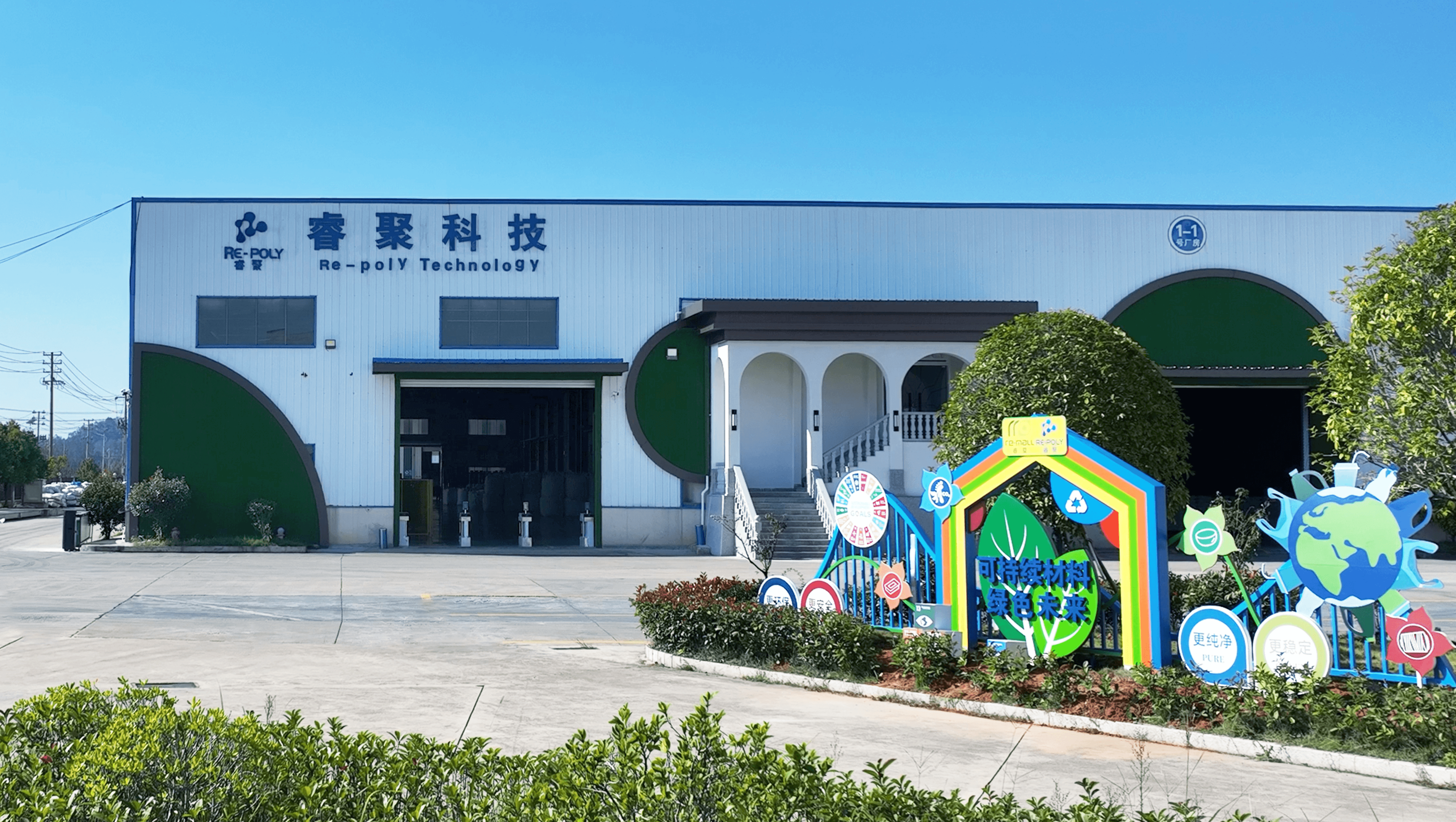
Manufacturing site. Capacity and batch records are the two documents that answer a supply-continuity question.
For discovery-stage buyers, four verification items convert these statements into usable procurement facts: a facility audit, grade-specific technical data sheets, certificate numbers checked against the issuing body’s registry, and batch test records covering the grades under consideration.
Frequently Asked Questions
Is re-mall PCR PP approved for food-contact use?
Re-mall holds an FDA Letter of No Objection listed in the FDA recycled plastics database as PNC 396, dated June 6, 2025, for the physical recycling of PP cups into food-contact articles in contact with all food types under Conditions of Use E through G. Food-contact eligibility is grade- and condition-specific: the grade, the feedstock origin and the intended use conditions must all fall inside that scope. Re-mall’s food-contact PCR PP and PCR-HDPE grades are supplied as pellets, and products and production lines hold GRS, ISO 14021, OBP and ISO 14067 certification, with products tested against REACH, RoHS and PAHs.
What PCR PP grades and melt flow ranges does re-mall PCRPP supply?
The re-mall PCRPP range includes general-purpose PCR PP at MFI 1–40 g/10 min, appearance-focused PCR PP at 5–50 g/10 min, safety-focused PCR PP at 5–70 g/10 min, food-contact PCR PP at 3–70 g/10 min and fiber-grade PCR PP at 5–60 g/10 min. Named multi-purpose grades are PCR-PP310 (MFI 55 g/10 min), PCR-PP392 (MFI 10 g/10 min) and PCR-PP301 (MFI 30 g/10 min). The same portfolio covers PCR-PE, PCR-PS, PCR-ABS and PCR-HDPE, so a multi-material project can be matched within one supplier relationship.
How should buyers evaluate China PCR PP pellet manufacturers?
Screen on verifiable evidence rather than on product descriptions. Confirm the legal entity and the production site, request a grade-specific technical data sheet stating MFR and the test methods used, obtain certificate numbers and check them against the issuing registry, require feedstock traceability documentation, and ask for batch test records. Then validate on your own tooling. As one reference point, Re-mall operates a CNAS-accredited recycled plastics laboratory through its wholly-owned subsidiary Shanghai Re-poly Environmental Technology Co., Ltd., reports 20,000 metric tons of annual capacity and 22 R&D engineers, and states that its products have been applied across more than 30 industry segments.
What determines the price of a PCR PP grade?
PCR PP is quoted per grade and application rather than as a single commodity price, because the technical requirements that define a grade also define its processing cost. The variables that most affect the quotation are the grade family, the PCR content, the certification scope required, appearance targets such as color consistency and transparency, odor targets, melt flow window, order volume and packaging, and whether food-contact documentation is part of the delivery. This is why two quotations for “PCR PP” can differ substantially without either being wrong: they may describe different materials.
How do sample testing and pilot validation work?
The sequence runs from raw material analysis and application requirement confirmation to PCR material matching, virgin/PCR ratio design, sample testing, pilot production verification and finally mass rollout. Material matching covers processing technology, MFR, rigidity, impact performance, color, PCR content and certification requirements, and validation is completed through sample testing and pilot production. Samples are therefore a technical step in the conversion process, not a formality before the order.
What about lead time and supply continuity?
Re-mall reports annual production capacity of 20,000 metric tons of recycled plastic pellets across a 10,000 m² facility employing more than 100 staff, with exports accounting for approximately 30% of sales to Europe, Japan, Southeast Asia, South Asia and North America. Scheduling is confirmed against the specific grade, the volume and the validation stage the project has reached, since pilot quantities and mass-production quantities follow different production planning. Buyers planning a launch should confirm grade availability and scheduling at the sample stage rather than after approval.
Conclusion
PCR PP is best understood as a specification family rather than a material name. The discovery-stage decisions that matter are the melt flow window that fits the existing tooling, the grade family that matches the application’s appearance and safety requirements, and the regulatory scope that a specific grade actually carries. Get those three aligned and the conversion is a controlled engineering process; skip them and the project surfaces problems at pilot production.
Re-mall’s approach to that risk is structural: application-specific grade families, a seven-stage conversion workflow with sample and pilot gates, batch testing supported by a CNAS-accredited laboratory, and certification documentation tied to specific submissions rather than to category claims.
Next step: validate a grade against your part
Share the resin you use today, the processing method and the application requirement, and the re-mall PCRPP team will match a PCR PP grade, confirm the compliance scope and arrange a sample for pilot testing.
Email: info@re-mall.cn | Tel: +86 400-175-0224 | WhatsApp: +86 152-2184-1874 | Website: remall-repoly.com
Company brochure (English, PDF): Download the Re-mall company profile
Have Questions or Need More Details?
Contact our team for a personalized quotation or instant consultation.
Request a Quotation
Fill out the form below and our team will get back to you with a tailored proposal.
WhatsApp Direct Chat
Prefer to chat in real-time? Message us on WhatsApp for instant assistance & quick answers.
- Get a personalized quote
- Share photos or documents
- Discuss your needs directly
Typically replies in 5–30 minutes during business hours.