Re-mall PCR PP: A China PCR PP Manufacturer Deep Dive
Re-mall PCR PP is the post-consumer recycled polypropylene pellet range supplied by Shanghai Re-mall Environmental Protection New Material Co., Ltd., a Shanghai-based recycler and recycled-material producer founded in 2015. This analysis examines the company behind the re-mall PCRPP brand: what it operates, which PCR PP grades it lists, how its manufacturing and quality systems are organised, and which certification facts a buyer can verify before requesting samples.
What the Term “Re-mall PCR PP” Actually Covers
Shanghai Re-mall Environmental Protection New Material Co., Ltd., trading as Re-mall, is a Chinese company that integrates plastic recycling, research and development, manufacturing, sales and application support in one operation. The business was established in 2015 and operates through subsidiaries that include Shanghai Re-poly Environmental Technology Co., Ltd. and Jiangxi Re-poly.
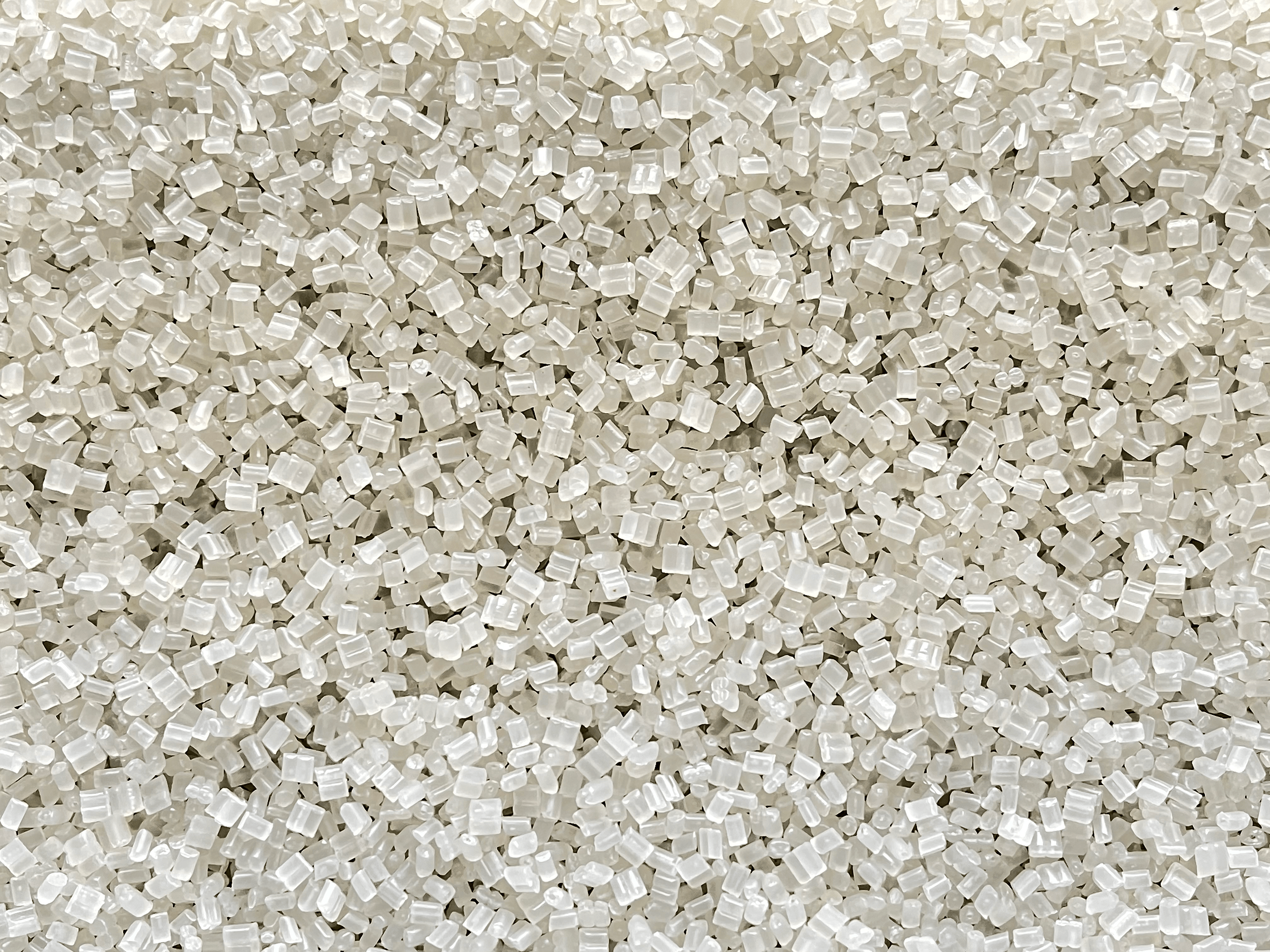
The brand term re-mall PCRPP refers to the company’s post-consumer recycled polypropylene output. Within that term sit several distinct product families rather than one commodity pellet: a general-purpose range, an appearance-focused range, a safety and food-contact range, and a fiber-grade range. The multi-purpose PCR PP grades are designated PCR-PP310, PCR-PP392 and PCR-PP301. Parallel recycled polyolefin lines cover PCR-PE, and the wider portfolio extends to PCR-PS and PCR-ABS, plus post-industrial recycled (PIR) and ocean-bound and ocean-recovered plastics.
A terminology point matters for anyone searching for China PCR PP pellet manufacturers. rPP is the general term for recycled polypropylene; PCR PP specifically means post-consumer recycled polypropylene, recovered from waste discarded by end consumers. PCR PP is therefore a subset of rPP, and the distinction affects documentation, traceability and regulatory eligibility.
The Discovery Problem: Three Gaps Buyers Hit First
Most early-stage PCR PP sourcing problems are not caused by a shortage of suppliers. They are caused by three information gaps that appear on almost every supplier page.
1. The label gap
“Recycled PP resin” and “food-contact grade PCR PP” are frequently used as if they described the same material. They do not. Recycled-content claims, appearance claims and food-contact eligibility are separate attributes, each supported by different evidence.
2. The scope gap
A food-contact statement is only meaningful when it names the grade, the recycling process, the feedstock and the conditions of use. The U.S. FDA recycled plastics database illustrates this clearly: listed submissions for polypropylene differ in permitted conditions of use and in feedstock restrictions. A generic “FDA-approved recycled PP” claim cannot be transferred from one submission to another.
3. The specification gap
Melt flow index alone does not predict whether a PCR PP will run on an existing tool. Odour, ash and contamination, colour consistency, black specks, impact performance and batch-to-batch drift determine whether a conversion succeeds. Suppliers rarely publish these values in comparable form, which is why a structured technical data sheet request belongs in the first supplier conversation, not the last.
Industry Background: Why PCR PP Sits on the Procurement Agenda
Demand for recycled polyolefins is being pulled by three forces at once: brand-level recycled-content commitments, extended producer responsibility rules in several markets, and internal carbon reporting. Market research from Fortune Business Insights values the global PCR plastic packaging market at USD 58.49 billion in 2026 and projects USD 108.27 billion by 2034, and the same study cites an approximately 60% carbon footprint reduction for mechanically recycled PP compared with virgin PP.
Regulatory infrastructure has developed in parallel. The FDA maintains a public inventory of submissions for post-consumer recycled plastics used in food-contact articles, and each entry is bounded by its own conditions of use, feedstock rules and authorisations. For buyers, the practical consequence is that PCR PP behaves less like a commodity and more like an engineered grade family: two pellets with the same nominal MFI can differ in odour, purity, colour and regulatory scope.
Company Overview: Re-mall at a Glance
The operating profile below is the factual base for everything that follows in this review.
| Attribute | Detail |
|---|---|
| Legal entity | Shanghai Re-mall Environmental Protection New Material Co., Ltd. |
| Founded | 2015; the company reports more than ten years in the recycled plastics industry |
| Business address | Room 166, Block A, Building 1, No. 2588, Jinhai Road, Pudong New Area, Shanghai, China 201209 |
| Manufacturing footprint | 10,000 m² |
| Employees | 100+ |
| Annual output | 20,000 metric tons |
| R&D team | 22 engineers |
| Main products | Recycled plastic pellets including PCR-PP, PCR-PE, PCR-PS and PCR-ABS, plus PIR, ocean-bound and ocean-recovered streams |
| Export share | Approximately 30% of sales |
| Main markets | Europe, Japan, Southeast Asia, South Asia, North America |
| Applications served | Materials applied across more than 30 industry segments |
| Intellectual property | Group and subsidiaries hold over 100 patents and 2 data intellectual property rights |
| Standards work | Subsidiaries participated in drafting 9 national standards and 1 industry standard, as primary drafting unit for 2 and among the top three drafting units for 5 |
| Testing infrastructure | In-house recycled plastics testing centre; CNAS-accredited recycled plastics laboratory operated by Shanghai Re-poly |
| Cumulative impact | Over 300,000 tons of plastic recycled; more than 500,000 tons of carbon emission reduction reported |
Capacity, cumulative recycling volume and carbon reduction figures are company-reported. They are useful for supplier pre-screening, but they do not replace a facility audit, batch records or a plant-level capacity confirmation.
The re-mall PCRPP Product Portfolio
The portfolio is segmented by application requirement rather than by resin type alone. That segmentation is the most useful part of the offer for buyers, because it maps a processing route and an end-use risk profile to a specific grade family.
| Product family | Materials and grades | Melt flow index | Intended applications |
|---|---|---|---|
| General-Purpose Recycled Materials | PCR-PP, PCR-ABS, PCR-HDPE, PCR-LDPE | PP 1–40 g/10min; ABS 15–25; HDPE 1–5; LDPE 1–2 | Daily necessities, home appliances, general injection-moulded and blow-moulded parts |
| Appearance-Focused Recycled Materials | PCR-PP, PCR-ABS, PCR-PC | PP 5–50 g/10min; ABS 18–22; PC 10–20 | Daily chemical packaging, homeware, storage and organisation, decor |
| Safety-Focused Recycled Materials | PCR-PP, PCR-ABS, PCR-HDPE, PCR-PA | PP 5–70 g/10min; ABS 18–20; HDPE 1–2; PA 8–20 | Daily chemical packaging, food contact materials, toys, office stationery |
| Food-Contact Recycled Materials | PCR-PP, PCR-HDPE | PP 3–70 g/10min; HDPE 1–5 | Food containers, beverage containers, kitchenware |
| Fiber-Grade Recycled Materials | PCR-PP, PCR-HDPE, PCR-PA6 | PP 5–60 g/10min; HDPE 1–10 | Carpets, home textiles, apparel, storage, nonwoven fabrics, woven fabrics, outdoor gear |
| Multi-purpose PCR-PP grades | PCR-PP310, PCR-PP392, PCR-PP301 | MFI 55, 10 and 30 g/10min respectively | Packaging, household and consumer goods, textiles and nonwovens, toys, office stationery |
How the technical claims are engineered
Low-odour PCR PP. Odour is controlled across multiple stages — raw material source control, washing, drying, melt filtration, devolatilisation and formulation optimisation — rather than through end-point deodorisation alone. This matters for packaging and household products where residual odour is a consumer-facing defect.
Colour consistency. Recycled PP colour drift is addressed through raw material colour sorting, colour matching management, homogenisation and process control. For high-transparency PCR PP and high-gloss packaging, black specks and colour deviation are the usual rejection triggers, so these controls carry direct commercial value.
Batch consistency. The stated workflow runs from raw material source control through fine sorting, deep washing, high-efficiency filtration, compounding and pelletising, batch testing and data traceability. Full-process control is the mechanism by which batch variation is contained.
High-purity food-contact material. The food-contact PCR-PP and PCR-HDPE range is sourced from post-consumer food packaging waste and processed on an in-house food-grade recycling line with sorting, washing, recycling and quality control. The listed feedstock specification is above 98% purity, with traceability from source to production.
Mechanical performance. Trade listing data published through the Chinaplas CPS+ marketplace describes a Re-mall PCR-PP high-modulus grade with a flexural modulus above 1,800 MPa and PCR content of 30%–50%, indicating that stiffness-driven applications such as thin-wall packaging and structural household parts are within the intended design space.
Fiber-grade capability. Re-mall describes high-purity recycled material for stable spinning and web formation across fiber, nonwoven and woven routes, and reports commercial production of 100% PCR-PP nonwoven fabric from post-consumer food packaging waste — a company-reported claim that should be validated with fabric trials and batch data.
Manufacturing, R&D and Quality Control
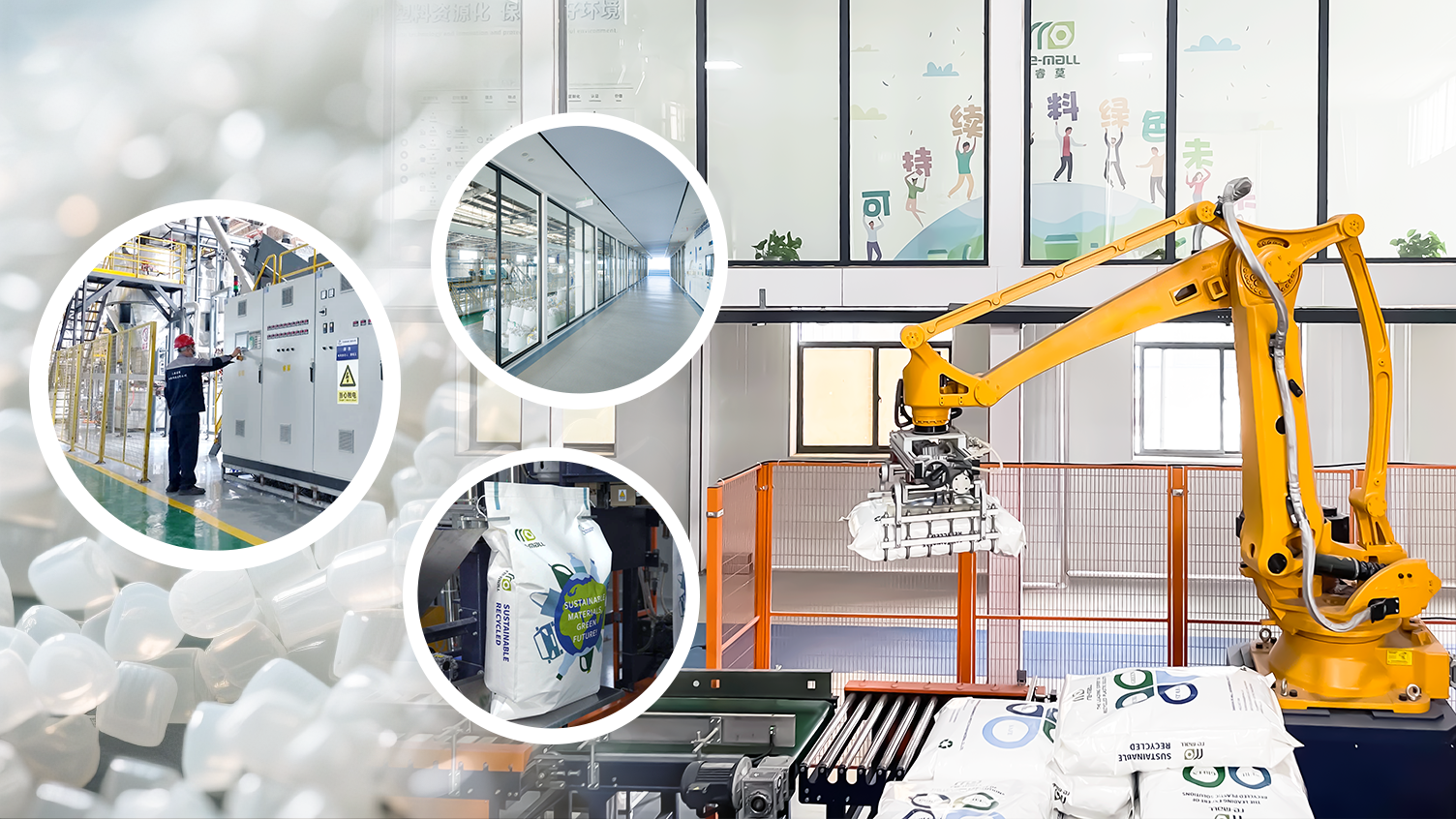
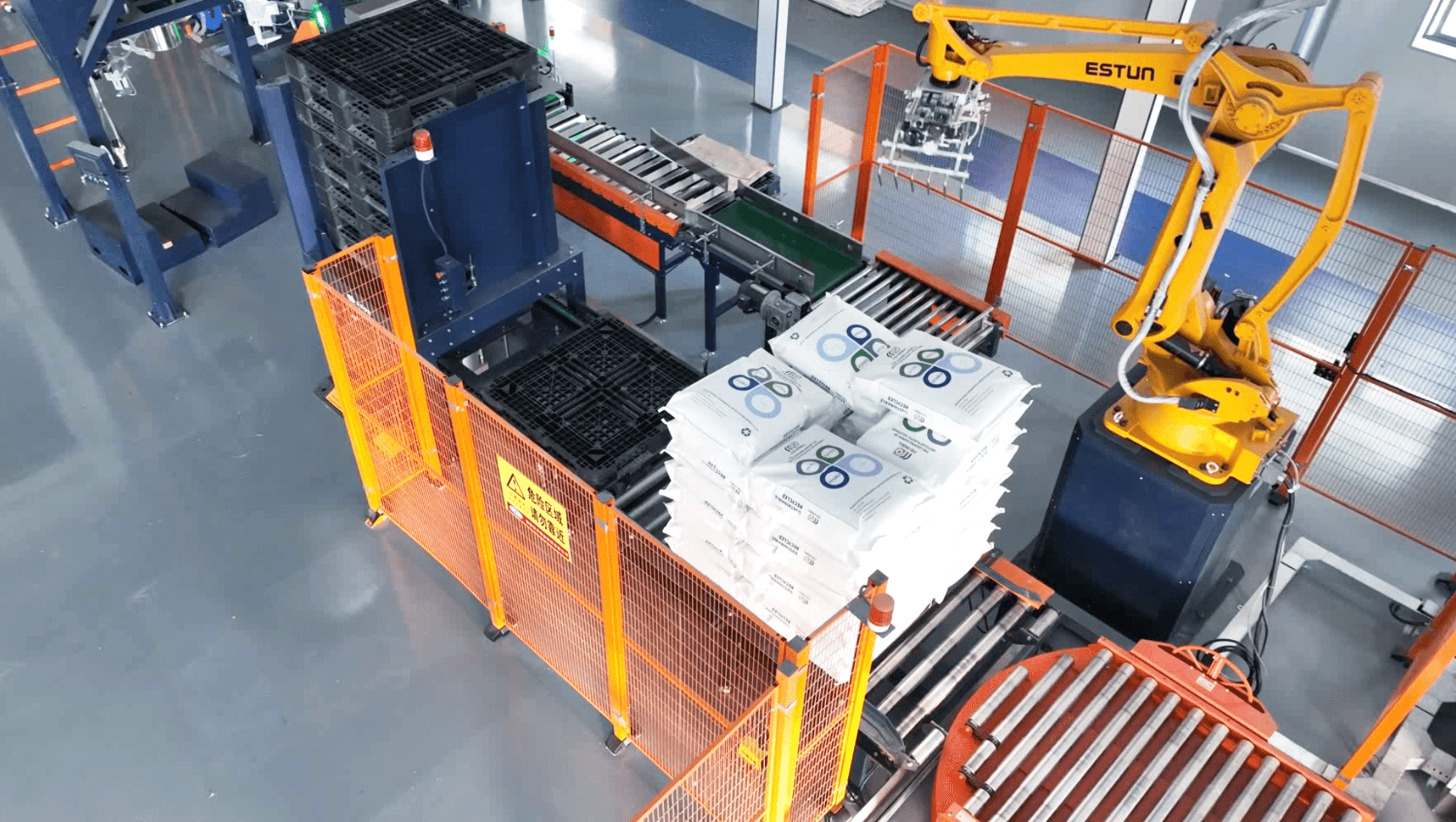
The manufacturing base is organised around a digital factory model, with the company holding Jiangxi Provincial Manufacturing Digital Transformation Benchmark – Smart Digital Factory and Jiangxi Provincial Advanced Smart Factory designations alongside a Fuzhou Green Factory designation. Process steps that determine final pellet quality — cleaning, filtration, compounding and packaging — are handled as discrete modules inside the plant rather than outsourced, which is the practical basis for batch traceability.
Quality control rests on two layers. The first is in-process control: source control, sorting, washing, filtration and batch testing at defined checkpoints. The second is laboratory verification through the in-house recycled plastics testing centre and the CNAS-accredited recycled plastics laboratory operated by wholly-owned subsidiary Shanghai Re-poly, supported by a multi-dimensional evaluation system for recycled materials.
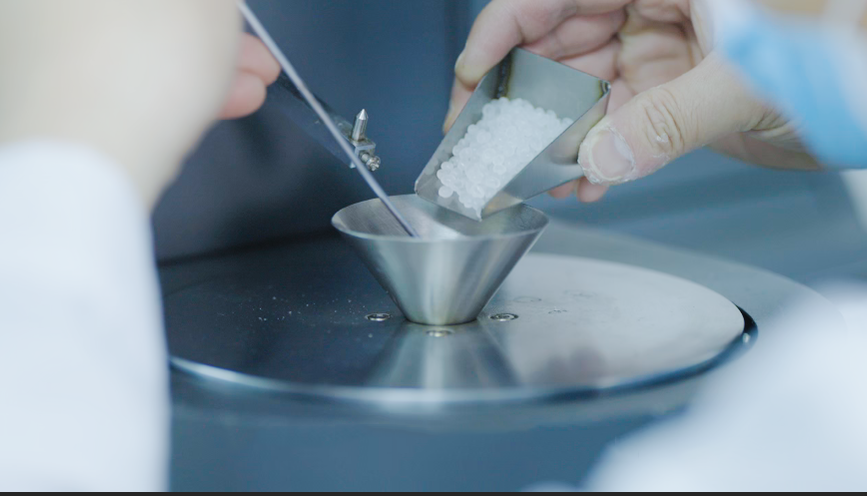
Certification and testing coverage is broad for a company of this size: FDA Letter of No Objection (NOL), Global Recycled Standard (GRS) certification, ISO 14021 self-declared environmental claim verification, Ocean Bound Plastic (OBP) certification and ISO 14067 product carbon footprint certification, with products also tested against REACH, RoHS and PAHs. Re-mall is a Sedex member. The research and development function is staffed by 22 engineers, and the group holds over 100 patents and 2 data intellectual property rights, supported by participation in 9 national standards and 1 industry standard.
Step-by-Step: How a Virgin-to-PCR PP Switch Runs
The conversion path published by Re-mall is a seven-stage sequence. It is worth reading as a buyer checklist, because each stage produces a document the purchasing team should hold before mass production.
- Raw material analysis. The current virgin resin, masterbatch and additive package are reviewed to establish a performance baseline.
- Application requirement confirmation. End-use performance, appearance, regulatory and processing requirements are fixed in writing.
- PCR material matching. A grade family is selected against processing technology, MFR, rigidity, impact performance, colour, PCR content and certification requirements.
- Virgin/PCR ratio design. The blend ratio is defined, allowing a phased substitution path rather than an immediate full swap.
- Sample testing. Physical, mechanical and appearance properties are checked against the agreed specification.
- Pilot production verification. The material runs on production equipment to confirm cycle time, scrap rate and mould behaviour.
- Mass rollout. Supply is scaled with batch records and traceability documentation attached.
Customisation is matched on the same six dimensions: processing technology, melt flow index, rigidity, impact performance, colour and PCR content, with certification requirements treated as a seventh gating variable. Validation is completed through sample testing and pilot production, which is the correct place for the buyer to insist on written acceptance criteria.
Where Re-mall PCR PP Is Used
PCR PP for packaging and daily chemical bottles
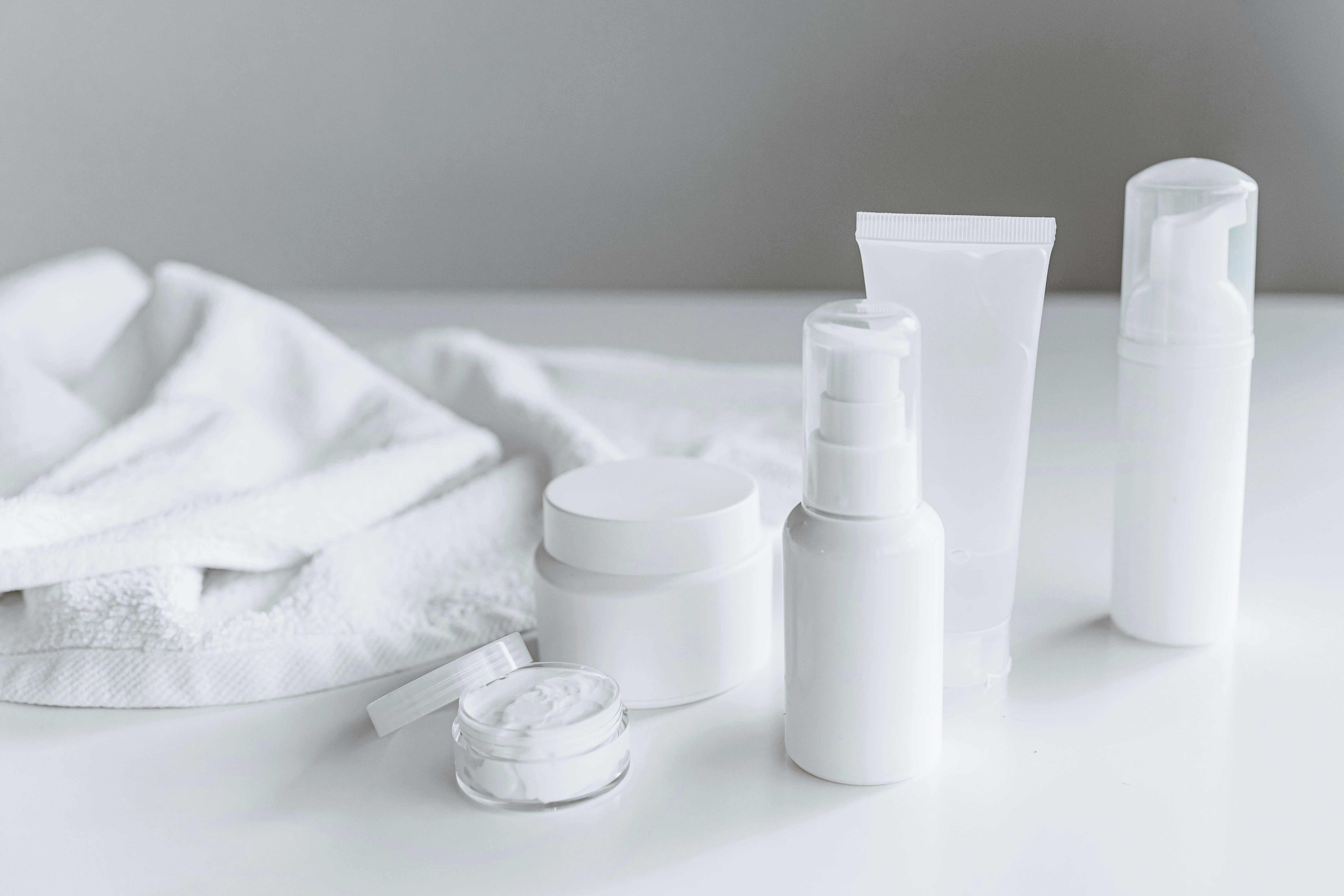
Daily chemical packaging is one of the most demanding appearance applications. The stated requirement for this segment is food-grade post-consumer recycled PP compliant with FDA NOL, translucent, easy to colour, capable of a high-gloss finish, low in black specks and suitable for direct contact with cosmetic contents. Re-mall lists projects of this type in China, the United States and France.
Food-contact containers and kitchenware
Food containers, beverage containers and kitchenware are served by the food-contact PCR-PP and PCR-HDPE grades, with the FDA NOL as the regulatory anchor and purity above 98% as the feedstock specification.
PCR PP for nonwoven fabric and woven packaging
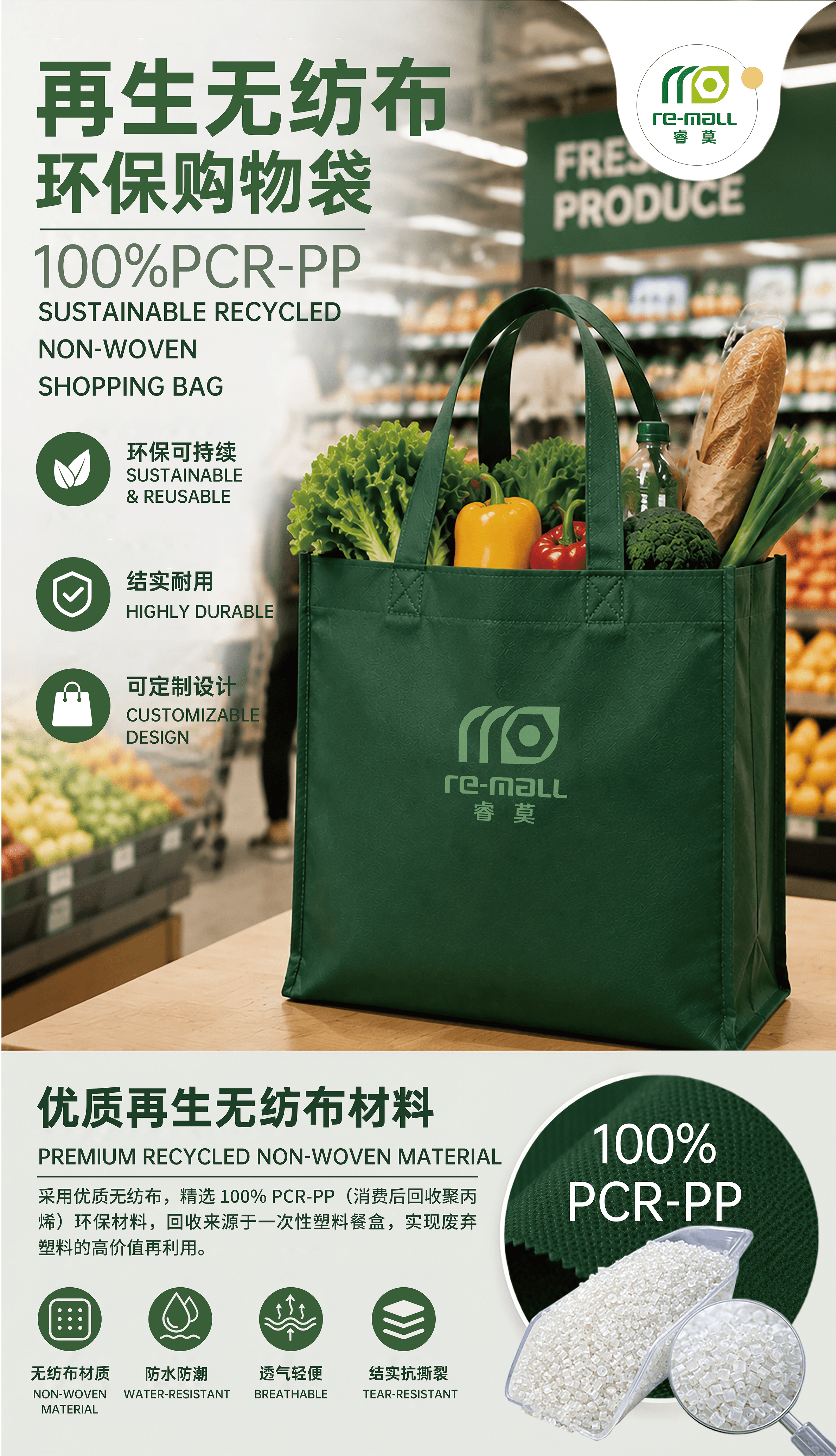
Nonwoven shopping bags, storage bags and storage boxes require water resistance, breathability, light weight and tear resistance. Fiber-grade PCR-PP with MFI 5–60 g/10min supports spinning and web formation, and Re-mall reports 100% PCR-PP nonwoven fabric produced from post-consumer food packaging waste.
PCR PP for toys
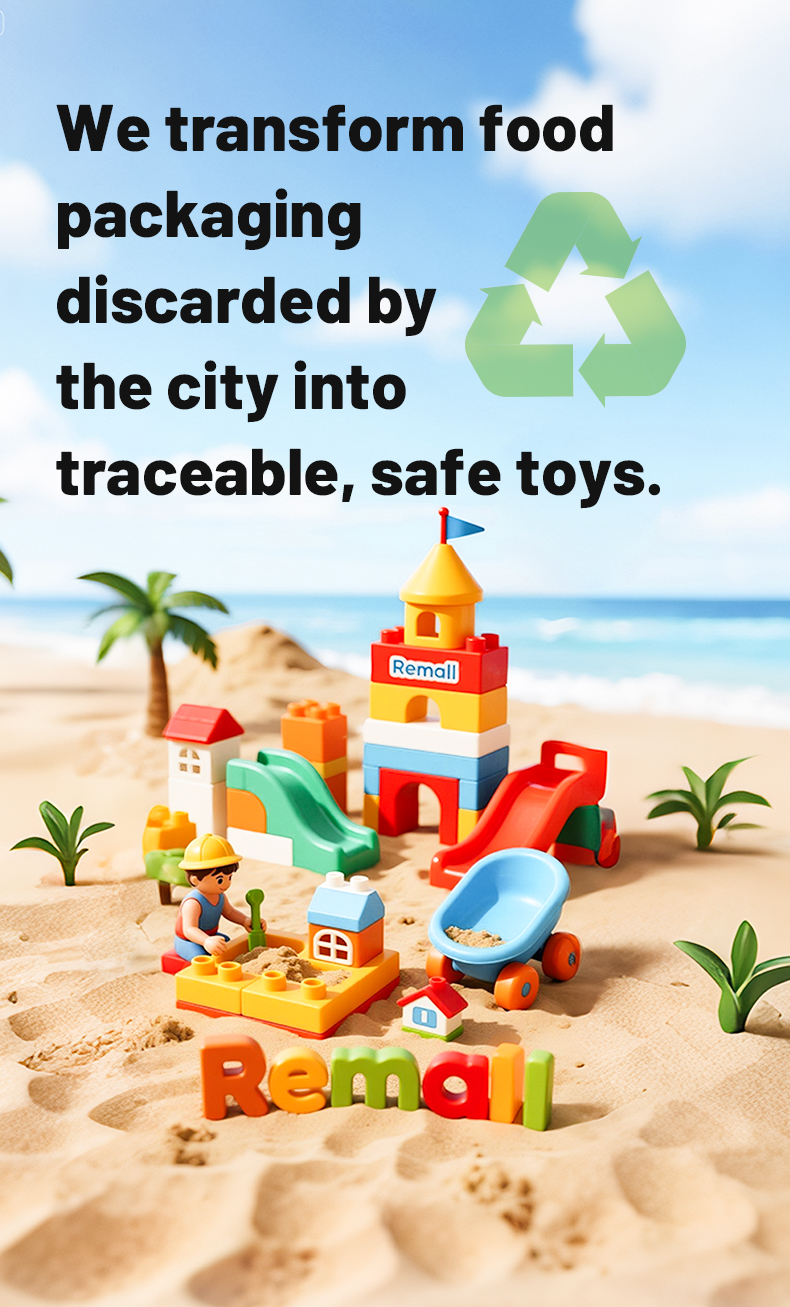
Children’s educational toys are listed as a target segment in the United States, Canada, Germany, the Netherlands, Spain, the United Kingdom, Australia and New Zealand. The stated requirements are food-contact safety, low odour and excellent colourability, which places toys in the safety-focused and appearance-focused grade families rather than in general-purpose grades.
Textiles, carpets and apparel
Staple fibre, yarn, fabric, carpet and apparel applications require consistent melt flow and low impurity content. Projects in this segment are listed in China, the United Kingdom, Portugal and Spain.
PCR PP for household products, appliances and stationery
Household and consumer goods, appliance parts, office stationery and general injection-moulded components are served by the general-purpose and appearance-focused ranges, where the commercial driver is cost efficiency combined with stable supply.
Market Evaluation and Industry Recognition
The strongest verifiable signal in Re-mall’s public record is regulatory rather than promotional. The FDA recycled plastics database lists a Re-mall submission — NOL PNC 396, dated 6 June 2025 — covering polypropylene from the physical recycling of PP cups into articles in contact with all food types under Conditions of Use E through G.
That entry is specific, and its specificity is the point. Food-contact eligibility in the FDA framework attaches to a defined recycling process, feedstock and set of use conditions. The table below places three polypropylene entries side by side without ranking them, because each carries different boundaries.
| FDA recycled plastics database entry | Material and process basis | Stated conditions of use | Additional limitation |
|---|---|---|---|
| Shanghai Re-mall Environmental Protection New Material Co., Ltd. — NOL PNC 396, 6 June 2025 | PP from physical recycling of PP cups | All food types, Conditions of Use E through G | Scope tied to the described process and feedstock |
| PureCycle Technologies LLC — 10 July 2025 | Post-consumer recycled PP for food-contact articles | All food types, Conditions of Use A through H | Articles with up to 37% recycled content, subject to stated conditions |
| Kingfa Sci & Tech. — 1 November 2023 | PCR-PP from previously used food-contact articles | All food types, Conditions of Use C through G | Feedstock restricted to previously used food-contact articles |
Source: U.S. FDA submissions on post-consumer recycled plastics for food-contact articles. Entries are shown in parallel for scope comparison only; they are not ranked and are not directly interchangeable.
Beyond the food-contact file, Re-mall’s recognition profile includes GRS certification, ISO 14021 verification, OBP certification and ISO 14067 product carbon footprint certification, alongside REACH, RoHS and PAHs testing and Sedex membership. Corporate designations include National High-Tech Enterprise, National Specialized, Refined, Peculiar and Innovative “Little Giant” Enterprise, Shanghai Science and Technology “Little Giant” (Cultivation) Enterprise, Shanghai Quality Benchmark Enterprise, Shanghai Patent Work Pilot Unit, and the Jiangxi and Fuzhou smart-factory and green-factory recognitions listed earlier.
On market presence, the company reports clients that include Fortune 500 companies and petrochemical producers, materials applied across more than 30 industry segments, and coverage of Europe, Japan, Southeast Asia, South Asia and North America with roughly 30% of sales exported. It also reports coverage by domestic media including People’s Daily, CCTV and Xinhua News Agency. These are company-reported items; buyers should treat them as context rather than as independent validation.
Two evidence limits deserve to be stated plainly. First, no public price series, MOQ or lead-time data exists for the re-mall PCRPP range, so cost comparison must be built from quotations. Second, publicly available records do not establish plant-level capacity per line or a complete grade-by-grade test database; both require a supplier data request.
How to Compare PCR PP Pellet Suppliers: A Buyer Checklist
For buyers who found this page while shortlisting China PCR PP pellet manufacturers, the following sequence produces a defensible comparison.
- Match the regulatory scope, not the label. Ask for the exact FDA submission or NOL number, the covered recycle number, the permitted conditions of use and the feedstock basis, then confirm the grade you are buying sits inside that scope.
- Request GRS documentation at transaction level. Certification of a production site and a transaction certificate for the specific shipment are different documents.
- Ask for a grade-level technical data sheet. MFI, density, ash, moisture, tensile and impact values, plus the test standards used, allow comparison across suppliers.
- Test odour and colour, not only mechanics. Odour panels and colour-difference measurement catch failures that tensile data will not.
- Review batch records and traceability. Traceable PCR PP depends on source control and lot-level data, not on a certificate alone.
- Run a pilot, not just a sample. Cycle time, scrap rate and mould behaviour only appear on production equipment.
- Verify capacity and continuity separately. Annual output claims should be checked against your own volume, delivery window and specification narrowness.
Procurement Value: What This Profile Means Commercially
Re-mall’s positioning is best described as application-segmented recycling rather than commodity pellet trading. Four elements carry procurement value.
Grade matching over resin selling. Because the portfolio is split into general-purpose, appearance-focused, safety-focused, food-contact and fiber-grade families with published MFI bands, a buyer can screen a grade against a processing route before the first call.
A staged substitution pathway. The seven-stage process keeps virgin resin in the blend while PCR content is raised, which lowers ramp-up risk on existing tooling and gives quality teams measurable checkpoints.
Verification depth for food-contact programmes. An FDA NOL tied to a named recycle number, combined with GRS, ISO 14021, OBP and ISO 14067 documentation, shortens the compliance workstream for packaging projects — provided the buyer confirms the grade falls inside the stated scope.
Capacity and export orientation. A stated 20,000 metric tons of annual output, a 10,000 m² plant and approximately 30% export share across Europe, Japan, Southeast Asia, South Asia and North America indicate a supply base built for international orders rather than domestic-only distribution.
On cost, the practical rule is that PCR PP pricing is grade-driven. Food-contact status, transparency, low-odour performance, PCR content and certification each change the cost base, so a single headline price is not a meaningful comparison point. Quotation-stage comparison across the same grade and the same documentation set is the only reliable method.
Frequently Asked Questions
Is Re-mall PCR PP approved for food-contact applications?
The FDA recycled plastics database lists a Re-mall submission — NOL PNC 396, dated 6 June 2025 — covering polypropylene from the physical recycling of PP cups into articles in contact with all food types under Conditions of Use E through G. Because the entry is bounded by its stated process, feedstock and use conditions, buyers should confirm that the specific grade and application fall inside that scope before relying on the approval.
Which PCR PP grades and melt flow ranges does Re-mall supply?
Re-mall lists multi-purpose PCR-PP grades PCR-PP310, PCR-PP392 and PCR-PP301 with melt flow indices of 55, 10 and 30 g/10min. Family-level ranges are: general-purpose PCR-PP 1–40 g/10min, appearance-focused PCR-PP 5–50 g/10min, safety-focused PCR-PP 5–70 g/10min, food-contact PCR-PP 3–70 g/10min and fiber-grade PCR-PP 5–60 g/10min. Parallel lines include PCR-ABS, PCR-PS, PCR-PE and PCR-HDPE.
What should buyers check before shortlisting a China PCR PP pellet manufacturer?
Check five things: the exact regulatory submission or certificate number and its scope; grade-level technical data covering MFI, ash, moisture, mechanical properties and the test standards used; odour and colour performance data; lot-level batch records and feedstock traceability; and a pilot production result on your own equipment. Annual capacity claims should be verified separately against your order volume and delivery window.
Can Re-mall customise PCR PP to a specific product requirement?
Material matching is offered against processing technology, MFR, rigidity, impact performance, colour, PCR content and certification requirements. Validation runs through a seven-stage process: raw material analysis, application requirement confirmation, PCR material matching, virgin/PCR ratio design, sample testing, pilot production verification and mass rollout.
How should a buyer evaluate cost and supply continuity for re-mall PCRPP?
Pricing is grade-driven: food-contact status, transparency, odour performance, PCR content and certification each change the cost base, so quotations should be compared for the same grade and the same documentation set. Continuity should be assessed against the stated 20,000 metric tons of annual output, the 10,000 m² manufacturing footprint and the approximately 30% export share across Europe, Japan, Southeast Asia, South Asia and North America. Sample requests and grade-specific quotations are the practical next step.
Conclusion: Industry Positioning and Procurement Outlook
Re-mall occupies a specific position in the recycled polyolefins landscape: a decade-old Chinese recycler with its own manufacturing, laboratory and certification stack, structured around application-segmented PCR PP rather than undifferentiated pellets. Its verifiable strengths are the FDA NOL tied to a named recycle number, GRS and ISO 14021 verification, OBP and ISO 14067 carbon footprint certification, a CNAS-accredited laboratory within the group, and participation in national and industry standard drafting.
The limits are equally clear. Capacity, cumulative recycling volume and customer composition are company-reported; there is no public price, MOQ or lead-time data; and plant-level capacity per line requires direct confirmation. Buyers running food-contact, toy or nonwoven programmes should therefore treat this profile as a structured screening document — sound enough to justify a technical data sheet request, a sample and a pilot run, and not a substitute for them.
Next Step: Sample, Quote or Full Catalogue
For grade-specific samples of PCR-PP, PCR-HDPE or fiber-grade material, quotation against a defined specification, or the full company and product catalogue, contact Re-mall directly.
Email: info@re-mall.cn | Tel: +86 400-175-0224 | WhatsApp: +86 152-2184-1874
Website: remall-repoly.com
Download the company brochure (PDF): Re-mall Corporate Brochure
Have Questions or Need More Details?
Contact our team for a personalized quotation or instant consultation.
Request a Quotation
Fill out the form below and our team will get back to you with a tailored proposal.
WhatsApp Direct Chat
Prefer to chat in real-time? Message us on WhatsApp for instant assistance & quick answers.
- Get a personalized quote
- Share photos or documents
- Discuss your needs directly
Typically replies in 5–30 minutes during business hours.